Baadasssss!, Independent Black Cinema, and the Politics of Resistance
Mario Van Peebles reconstructs the making of Sweet Sweetback’s Baadasssss Song as a battle against industrial racism, financial exclusion, and cinematic control.
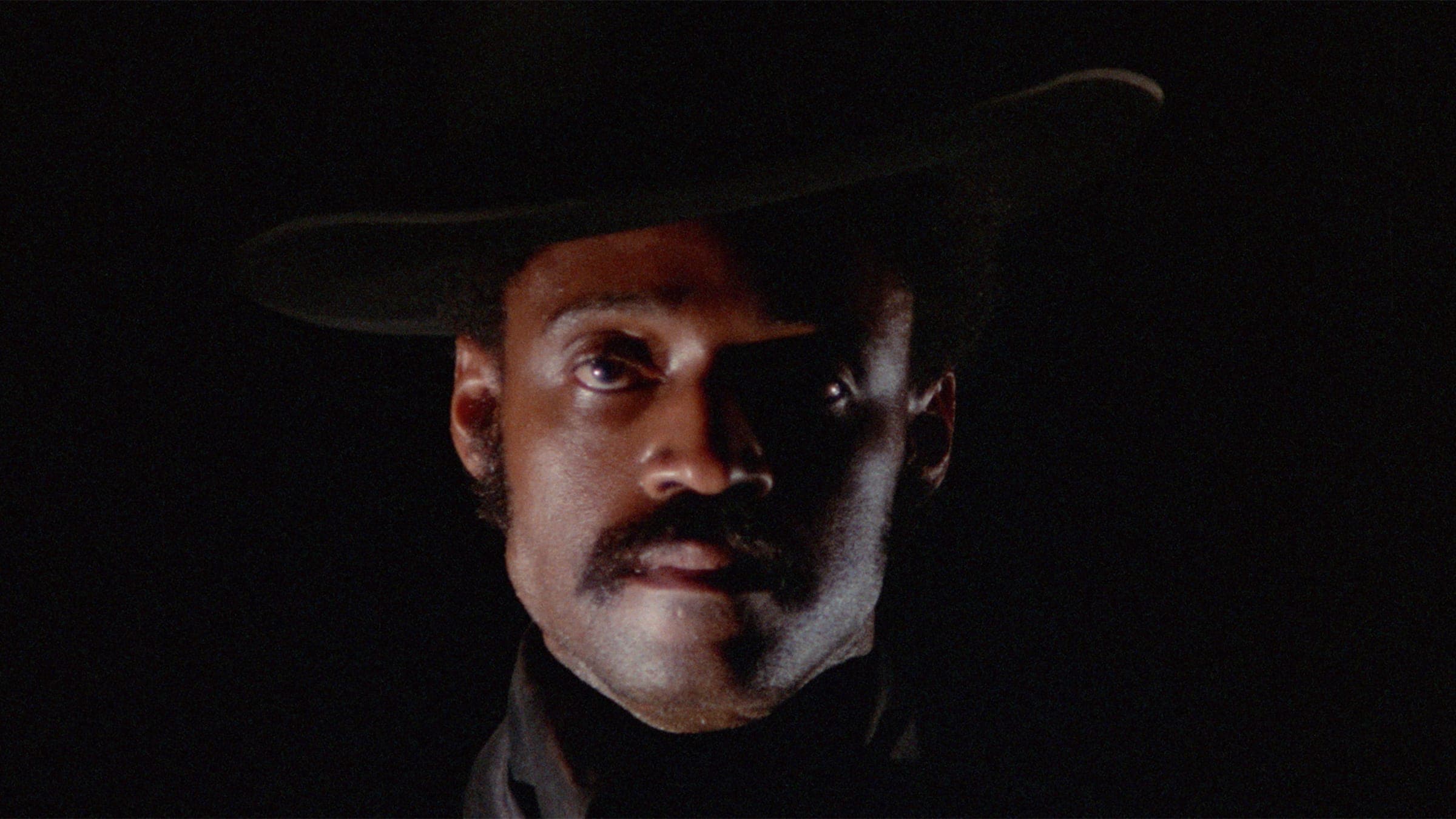
# Baadasssss!, Independent Black Cinema, and the Politics of Resistance
Baadasssss! is not simply a biographical film about the making of Sweet Sweetback's Baadasssss Song.
It is also a historical examination of the structural barriers faced by Black filmmakers within the American film industry.
Directed by Mario Van Peebles, the film reconstructs the experiences of his father, Melvin Van Peebles, during the production of Sweet Sweetback's Baadasssss Song.
Although the film explores multiple stages of production, the most important and difficult struggle remains financing and production management because nearly every other obstacle — casting, permits, labor, equipment, distribution, and even physical exhaustion — emerges from the absence of institutional support.
The film demonstrates that independent Black filmmaking in early 1970s America required far more than artistic talent.
It required resistance against:
- industrial racism,
- censorship,
- union exclusion,
- surveillance,
- and economic control.
Financing as Ideological Control
One of the earliest obstacles Melvin encounters occurs during pre-production when he struggles to secure financing for the project.
He is warned repeatedly that unless he quickly develops something commercially “safe” and marketable, production companies will lose interest in him entirely.
This pressure reveals the industrial logic of Hollywood during the late 1960s and early 1970s:
Black filmmakers were rarely granted creative autonomy unless their work remained compatible with white-controlled commercial expectations.
Melvin eventually develops a narrative centered around a Black protagonist violently resisting racist police oppression and escaping institutional control.
The major studios reject it immediately.
And this rejection becomes historically significant.
The issue is not simply financial caution.
The narrative itself threatens dominant racial ideologies embedded within mainstream American cinema.
As Stuart Hall argues, representation remains inseparable from structures of power. Cinema does not merely reflect society passively — it actively organizes visibility through ideological systems.
Hollywood during this period largely restricted Black representation to:
- caricature,
- containment,
- criminality,
- or narratives reassuring to white audiences.
Sweetback instead centered:
- Black rage,
- Black sexuality,
- Black resistance,
- and anti-police rebellion
without apology or moral softening.
A film portraying a Black man defeating racist authority figures was therefore perceived not simply as risky entertainment, but as politically destabilizing.
Financing itself becomes ideological.
Studios fund narratives that maintain dominant social structures.
Independence Through Exclusion
Unable to secure support from major studios, Melvin turns toward independent investors.
But this creates new forms of exploitation.
One disturbing moment in Baadasssss! involves Melvin being sexually harassed by a European producer while attempting to secure financing.
The sequence becomes important because it dismantles romantic myths surrounding independent cinema.
Independence frequently emerges from exclusion rather than freedom.
Melvin’s desperation for funding places him within deeply unequal power relationships where dignity and autonomy become negotiable under financial pressure.
The film therefore complicates simplistic celebrations of independent filmmaking.
Creative independence here is born from institutional abandonment.
Guerrilla Filmmaking and Survival
Even after Melvin finally secures backing, instability continues.
His investor is arrested and placed on trial, causing production to collapse once again.
Eventually, Melvin finances the project himself using personal resources.
At this point, the production transforms into what film scholars often describe as guerrilla filmmaking:
a production model operating outside institutional systems through improvisation, personal sacrifice, and resourcefulness.
This transformation matters enormously because every later production difficulty stems directly from financial precarity.
The lack of institutional support destabilizes every stage of filmmaking simultaneously.
Race, Labor, and Union Exclusion
The film also demonstrates how race structured labor systems within Hollywood itself.
Melvin insists that half of his crew consist of minorities, fully aware that film unions will likely resist this decision.
To circumvent institutional gatekeeping, he deceptively presents the project as pornography during early production stages.
This sequence becomes extraordinarily revealing.
Access to:
- professional crews,
- equipment,
- technical infrastructure,
- and production labor
was historically controlled by overwhelmingly white institutions.
Melvin therefore manipulates the system simply to create opportunities for Black technicians and artists excluded from mainstream production structures.
His struggle becomes collective rather than individual.
He is not merely trying to make a film.
He is attempting to construct alternative space for Black creative labor inside an exclusionary industry.
Material Conditions and Cinematic Form
Financial instability continues throughout principal photography.
Because the production cannot afford major union performers, Melvin assembles a cast composed largely of unknown or inexperienced actors.
He simultaneously performs multiple production roles:
- location scouting,
- directing,
- logistics,
- coordination,
- financing.
Unlike major Hollywood productions organized through hierarchical specialization, Sweetback becomes decentralized and improvisational.
This reinforces its independent spirit while placing extraordinary physical and psychological pressure upon Melvin himself.
One particularly revealing obstacle occurs when the lead actress — who also functions as Melvin’s secretary — quits days before filming because she objects to the sexually explicit content of the script.
The production constantly exists on the edge of collapse.
Further financial limitations force Melvin to shoot on 16mm film stock rather than industry-standard 35mm.
The result produces grainier, rougher imagery.
Ironically, this economic limitation later becomes central to the film’s aesthetic identity.
The raw visual texture of Sweetback emerges partly from necessity rather than purely artistic intention.
And this reveals something important about independent cinema broadly:
material conditions directly shape cinematic form.
The handheld camerawork, fragmented editing, rough sound, and chaotic visual energy emerge not solely from experimentation, but from economic limitation itself.
State Surveillance and Institutional Hostility
The production faces further disruption when members of the crew are arrested despite possessing valid filming permits.
This sequence highlights the broader climate of racial surveillance operating during the era.
The making of Sweetback occurs during the aftermath of:
- the Civil Rights Movement,
- Black Power activism,
- police repression,
- and increasing institutional hostility toward radical Black political expression.
The harassment of the production therefore cannot be understood as isolated inconvenience.
It reflects larger structures of state suspicion toward politically radical Black cultural production itself.
Community Support Versus Institutional Absence
Eventually, Melvin seeks emergency financial assistance to keep the production alive.
This becomes essential for keeping production alive.
The moment reveals the near-total absence of institutional support systems for Black filmmakers during the period.
Survival depends upon:
- informal solidarity,
- community networks,
- interpersonal support.
The production effectively becomes an act of collective resistance against exclusionary Hollywood systems.
Exhaustion and Physical Sacrifice
The difficulties continue into post-production.
Melvin struggles to complete:
- editing,
- narration,
- sound design,
- music,
- and final assembly
with almost no resources remaining.
The film portrays him working to the point of physical collapse, eventually developing blurred vision in his left eye due to exhaustion and overwork.
These scenes become crucial because they reveal the bodily cost of independent filmmaking for marginalized artists denied institutional infrastructure.
Creative autonomy here is inseparable from physical sacrifice.
Distribution and Industrial Gatekeeping
Even after completion, distribution becomes another enormous obstacle.
Many theaters refuse exhibition until the film receives official classification.
The eventual X rating severely restricts distribution because it associates the film with obscenity and pornography rather than legitimate artistic cinema.
Yet this controversy cannot be separated from race.
Hollywood had long commodified violence and sexuality.
But Sweetback became uniquely threatening because it centered unapologetic Black agency and liberation.
The issue was never simply explicitness.
It was political visibility.
They are not facing artistic criticism.
They are facing industrial control.
Black Audiences and Cinematic Self-Representation
Remarkably, despite receiving an extremely limited release, the film becomes a major financial success and eventually one of the foundational texts of the blaxploitation era.
Its popularity proved that Black audiences desired films speaking directly to their experiences rather than filtering them through white liberal frameworks.
At the same time, the film’s legacy remains complicated.
While Sweetback opened industrial space for Black-centered cinema, later blaxploitation films were criticized for reproducing exploitative stereotypes commercially.
Nevertheless, Baadasssss! portrays Melvin’s original project as emerging from sincere desire for Black cinematic self-representation.
Cinema, Race, and Industrial Power
Ultimately, Baadasssss! demonstrates that the greatest obstacle Melvin Van Peebles faced was never simply lack of money itself.
The deeper problem was the industrial and racial system making independent Black cinema financially precarious from the beginning.
Every challenge:
- unstable casting,
- limited equipment,
- union exclusion,
- police harassment,
- distribution barriers,
- physical exhaustion,
can be traced back to institutional refusal to support politically radical Black storytelling.
The film therefore functions not merely as behind-the-scenes filmmaking history, but as examination of how race, capitalism, and cultural power intersect within American cinema itself.
Melvin’s struggle to create Sweet Sweetback’s Baadasssss Song ultimately becomes symbolic of a broader fight for Black creative autonomy and cinematic self-representation.
And that struggle remains inseparable from the history of independent American cinema.
---
# Works Cited
Baadasssss!. Directed by Mario Van Peebles, Sony Pictures Classics, 2003.
Guerrero, Ed. Framing Blackness: The African American Image in Film. Temple University Press, 1993.
Hall, Stuart. “The Spectacle of the Other.” Representation: Cultural Representations and Signifying Practices, edited by Stuart Hall, Sage Publications, 1997, pp. 223–290.
Sweet Sweetback's Baadasssss Song. Directed by Melvin Van Peebles, Yeah Inc., 1971.
Watkins, S. Craig. Representing: Hip Hop Culture and the Production of Black Cinema. University of Chicago Press, 1998.
Synaptic connections
Backlinks
This node currently sits alone in the archive.
If this resonated
Join the archive.
New essays, recent fragments, and what I am reading or watching, sent only when there is something worth sending.
Join archive