The Count of Monte Cristo and Masculine Reinvention
Revenge, patience, and what Dumas understood about self-transformation.
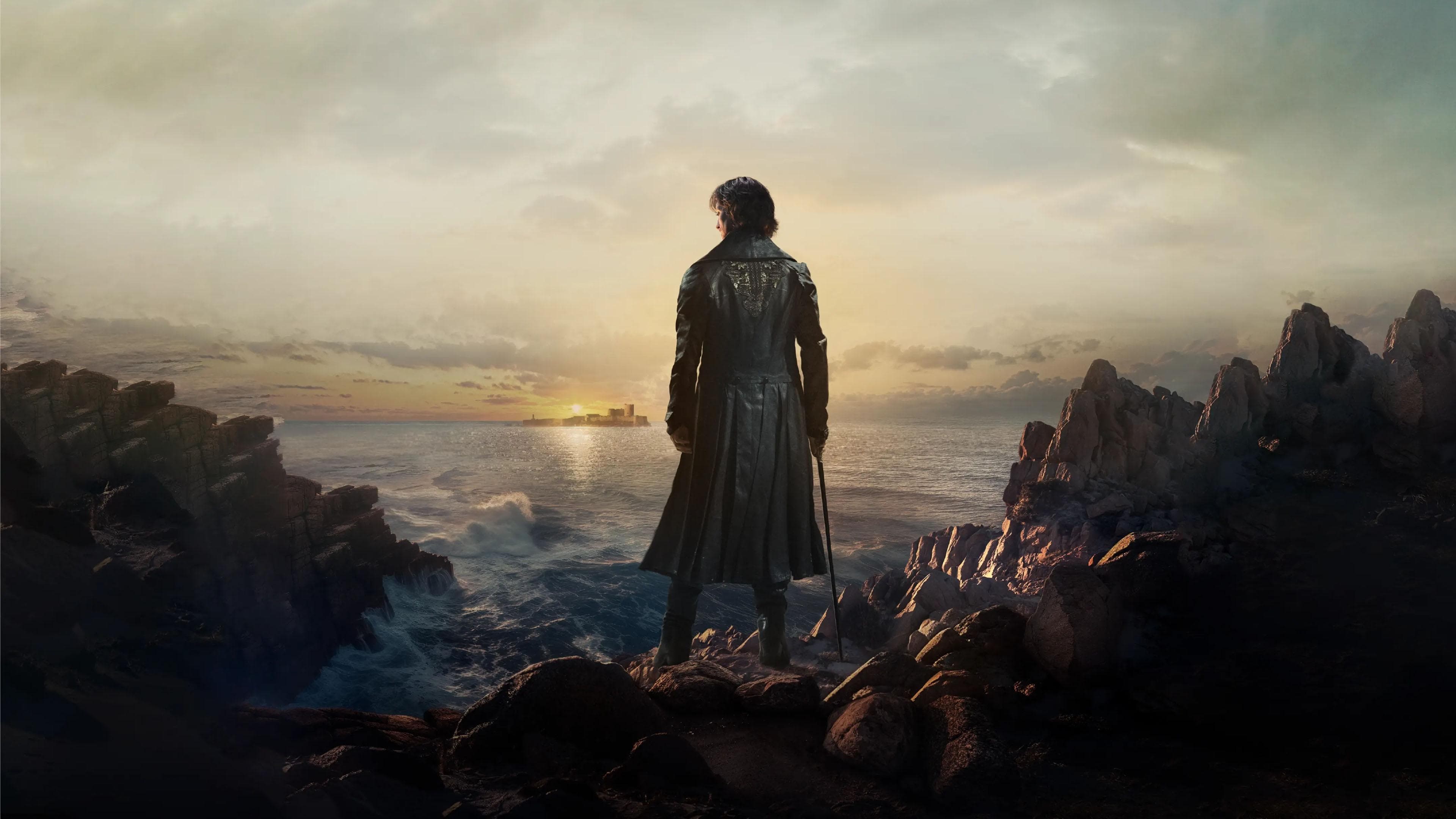
# The Count of Monte Cristo and Masculine Reinvention: Modern self-help treats transformation like a software update.
Wake up earlier. Track habits. Cold showers. Protein intake. Dopamine detoxes. The assumption underneath all of it is strangely optimistic: that the self is fundamentally intact and merely requires optimization.
But Alexandre Dumas understood something darker.
Sometimes the self cannot be optimized. Sometimes it has to die.
Edmond Dantès does not become the Count of Monte Cristo through productivity. He becomes the Count through burial. Through betrayal. Through isolation. Through rage metabolized over years until it becomes architecture.
That is what makes The Count of Monte Cristo endure. Beneath the revenge fantasy lies one of literature’s deepest meditations on masculine reinvention.
Not improvement.
Reinvention.
---
“Only a man who has felt ultimate despair is capable of feeling ultimate bliss.”
---
The Collapse of the Naive Self
At the beginning of the novel, Edmond Dantès is almost offensively innocent.
He is competent, loyal, ambitious without arrogance. He trusts institutions. He trusts friendship. He trusts love. He believes merit naturally leads to justice.
In other words, he possesses the psychology of a man who has not yet encountered the Real.
And then the world introduces itself.
Dantès is betrayed not by monsters but by ordinary human envy. Danglars fears his success. Fernand desires Mercédès. Villefort sacrifices him to preserve his political future. Each man chooses self-interest over morality with terrifying ease.
This is Dumas’ first great insight: civilization is thinner than we think.
Beneath etiquette and law lies appetite.
The prison of Château d’If therefore becomes more than a physical confinement. It becomes an initiation into reality itself. The naive young sailor dies there psychologically long before he ever escapes physically.
Modern culture often misunderstands masculinity because it frames male development only in terms of achievement. Career. Wealth. Status. Confidence.
But Dumas suggests masculine maturation begins with disillusionment.
The moment a man realizes the world will not save him.
The moment he understands that innocence offers no immunity against betrayal.
The moment he stops assuming fairness is built into existence.
This realization can produce bitterness. But it can also produce consciousness.
Dantès survives because suffering eventually forces him to see clearly.
---
Prison as Psychological Metamorphosis
The most important section of Monte Cristo is not the revenge. It is the prison.
Contemporary audiences often rush through Château d’If because they want the catharsis of vengeance. But Dumas lingers there intentionally. Transformation requires duration.
A man cannot become someone else overnight.
The prison strips Dantès of identity piece by piece. Time dissolves certainty. Isolation destabilizes memory. Hope itself becomes dangerous. This resembles what psychologists describe as ego death: the collapse of the previously coherent self-image under extreme existential pressure.
Then Abbé Faria enters the story.
Faria is not merely a mentor figure. He represents symbolic rebirth through knowledge. Inside the darkness of the prison, Dantès acquires education, discipline, languages, science, strategy, philosophy. More importantly, he acquires interpretation.
Before Faria, Dantès suffers blindly.
After Faria, he understands.
And understanding changes the structure of suffering.
Nietzsche once wrote that “he who has a why to live can bear almost any how.” Dantès discovers a why. Revenge becomes metaphysical fuel. The prison no longer appears random. It becomes preparatory.
This is psychologically significant because meaning transforms pain from chaos into narrative.
A man with no framework for suffering collapses into despair.
A man who can integrate suffering into identity becomes dangerous.
---
The Construction of the Count
One of the most fascinating aspects of the novel is that the Count of Monte Cristo is fundamentally artificial.
He is performed.
His speech, clothing, wealth, mystery, composure, intelligence, even his emotional restraint function like theatrical design. Dantès understands something modern culture still struggles to admit:
Identity is partly constructed myth.
The Count is not the “true self” hidden underneath Edmond. He is a deliberate creation designed to command reality.
This aligns surprisingly well with Carl Jung’s concept of individuation. Jung argued that psychological development often requires confrontation with the shadow: the repressed capacities hidden beneath socially acceptable identity. Dantès integrates traits that Edmond lacked entirely—coldness, calculation, manipulation, strategic aggression.
The old self was too soft for reality.
The new self adapts to it.
And this is where the novel becomes deeply masculine in a way modern discourse rarely articulates properly.
Masculine development is not merely becoming gentler or stronger. It is learning controlled force.
A mature man must integrate both mercy and violence psychologically. He must become capable of danger without becoming consumed by it. The Count fascinates audiences because he embodies disciplined potency. His rage is not chaotic. It is aestheticized. Organized. Patient.
He waits years.
Modern culture, obsessed with immediacy, has almost lost respect for patience as power. But Monte Cristo understands delayed action as a form of sovereignty. The Count wins because he controls impulse while others remain enslaved by appetite.
Danglars wants wealth immediately.
Fernand wants Mercédès immediately.
Villefort wants political preservation immediately.
The Count alone understands timing.
Power often belongs not to the strongest man but to the man who can endure longest without emotional leakage.
---
Revenge and the Male Psyche
The uncomfortable truth is that revenge fantasies remain psychologically compelling for many men because they symbolically repair humiliation.
Humiliation is central to masculine psychology.
A man can survive failure more easily than powerlessness. But betrayal combined with helplessness creates psychic fragmentation. Dantès loses not only freedom but identity, status, love, future, and meaning simultaneously. The fantasy of revenge therefore becomes a fantasy of restored agency.
This is why The Count of Monte Cristo still resonates across generations.
Not because people literally want revenge, but because they understand the emotional desire to return transformed before those who dismissed, betrayed, or underestimated them.
The fantasy is archetypal.
The rejected man returns powerful. The forgotten man becomes unforgettable. The prisoner becomes myth.
Cinema repeatedly recreates this structure because audiences instinctively recognize it. From Oldboy to The Dark Knight Rises, from John Wick to Scarface, masculine reinvention often emerges through symbolic death followed by re-entry into society under a reconstructed identity.
But Dumas is wiser than simple revenge fantasies.
Because revenge does not save the Count.
It empties him.
---
The Failure of Total Vengeance
One of the most sophisticated aspects of the novel is that Dumas eventually destabilizes the Count’s god-complex.
For much of the narrative, Monte Cristo behaves like divine judgment itself. He orchestrates consequences with near-supernatural precision. He sees himself as Providence.
But slowly he realizes something horrifying.
Human beings are too fragile for absolute punishment.
In pursuing perfect revenge, he begins harming innocents. His certainty starts collapsing. The fantasy of omnipotent control reveals its monstrous underside.
This matters because wounded masculinity often dreams of becoming invulnerable. After betrayal, many men unconsciously attempt to eliminate softness entirely. They seek total emotional invincibility.
But total invulnerability produces emotional death.
The Count becomes magnificent, but he also becomes lonely beyond comprehension.
He can control rooms but cannot fully recover intimacy. He can manipulate destinies but cannot resurrect innocence. He can punish betrayal but cannot undo trauma.
That is Dumas’ final insight.
Transformation always costs something.
---
Masculinity Beyond Performance
What makes The Count of Monte Cristo endure is that it understands masculine reinvention as both necessary and tragic.
Dantès must transform. The innocent sailor could never survive the world he encountered. Yet the transformation itself wounds him irreversibly.
Modern masculinity discourse often collapses into caricature.
Either men are told to remain soft indefinitely, or they are encouraged toward performative hyper-masculinity built around domination, wealth, emotional numbness, and status theatre.
Dumas offers something more psychologically truthful.
A man must develop strength because reality demands it. But strength without humanity becomes monstrosity. The challenge is not becoming hard. The challenge is remaining alive internally while confronting brutality externally.
That is why the novel ultimately ends not with conquest, but with surrender to uncertainty.
Not domination.
Not revenge.
Hope.
---
Conclusion: Reinvention as Burial
The real lesson of The Count of Monte Cristo is not that suffering automatically makes men stronger.
Many suffering men simply become bitter.
Transformation occurs only when suffering becomes metabolized into consciousness rather than resentment.
Edmond Dantès survives because he transforms pain into discipline, intelligence, patience, and vision. But Dumas refuses to romanticize the process. Reinvention is not motivational content. It is psychological demolition followed by reconstruction.
And perhaps that is why the novel continues to resonate so deeply today.
Because many modern people feel trapped between identities.
Too disillusioned to remain innocent. Too wounded to return to who they once were. Yet still searching for a form capable of carrying them forward.
Dumas understood that sometimes a man must disappear before he can become visible to himself.
The old self does not evolve.
It is buried beneath the sea beside Château d’If. And something stranger swims back.
Synaptic connections
Backlinks
This node currently sits alone in the archive.
Related reading
Nearby essays
Dracula and the Gothic Unconscious
Dracula survives because the vampire was never merely a monster. It was civilization dreaming anxiously about itself.
Why Horror Terrifies Us: A Žižekian and Lacanian Reading of Fear
Horror is not frightening because monsters exist. Horror is frightening because the symbolic order fails, and we suddenly glimpse what was always underneath reality.
If this resonated
Join the archive.
New essays, recent fragments, and what I am reading or watching, sent only when there is something worth sending.
Join archive