Casablanca, Ideology, and the Politics of Desire
Revisiting nationalism, masculinity, propaganda, and emotional engineering in one of cinema’s most mythologized films.
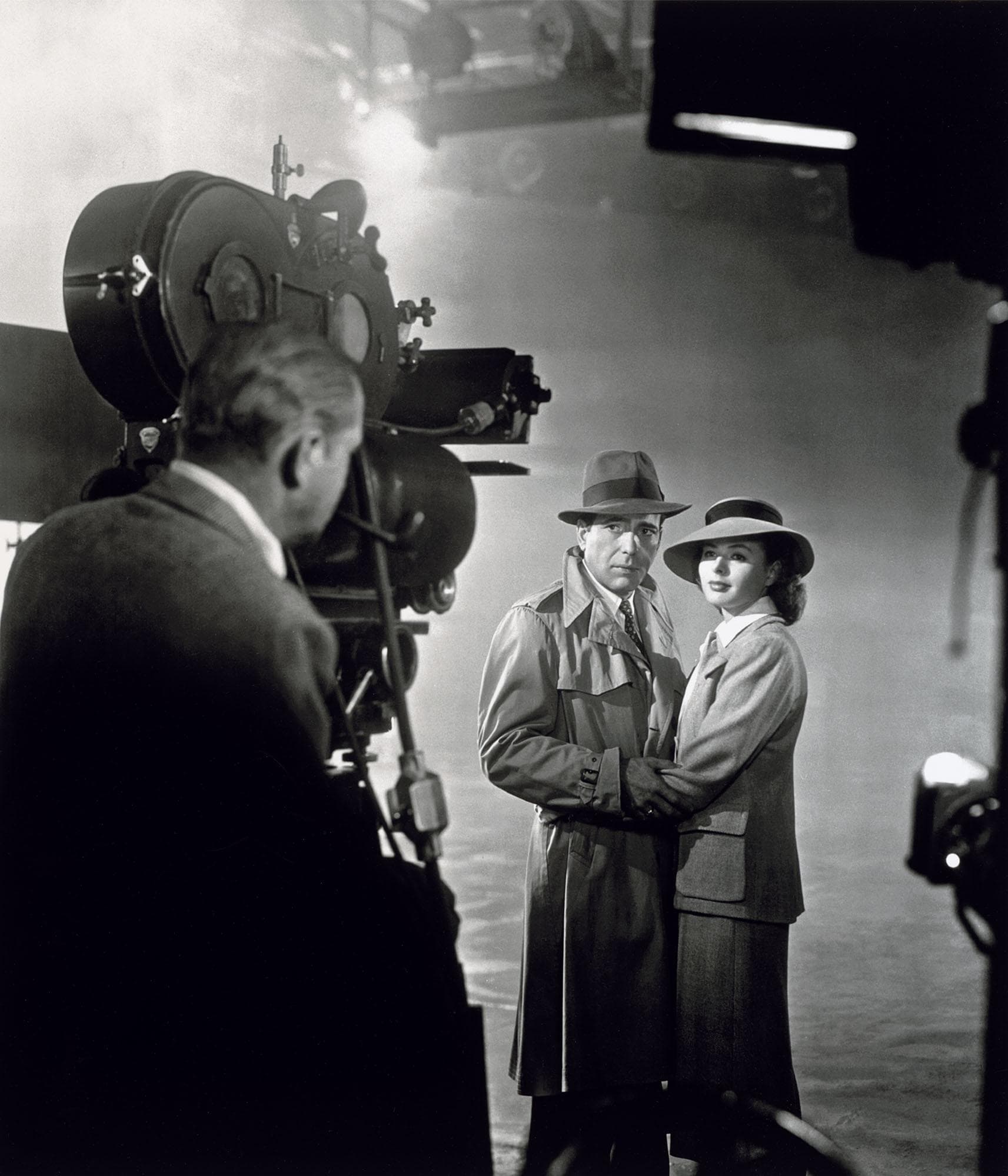
# Casablanca, Ideology, and the Politics of Desire: Originally written during my early film studies years. Revisited now with a sharper understanding of ideology, masculinity, propaganda, and the emotional machinery of cinema.
There are some films that survive because they are technically brilliant.
And then there are films that survive because they understood the emotional condition of an era better than the people living through it.
Casablanca belongs to the second category.
When I first encountered the critical essays surrounding Casablanca, I approached the film mostly as an academic object. I summarized arguments. I explained theories. I responded to authors. But revisiting these essays today, what strikes me is not merely the film’s political importance or romantic legacy.
It is the frightening precision with which the film manufactures emotional consensus.
The film does not simply tell a love story during wartime.
It quietly reorganizes the viewer’s moral instincts.
That is why it endured.
Cinema as Emotional Infrastructure
Jack Nachbar's essay, "Doing the Thinking For All of Us: Casablanca and the Home Front," argues that the film functioned almost like emotional propaganda for wartime America.
At first glance, this sounds cynical.
But the more one reflects on the historical context, the more convincing it becomes.
America in 1942 was psychologically disoriented. Pearl Harbor had shattered isolationist comfort. Families were fractured by war. Fear and uncertainty had entered ordinary domestic life. In moments like these, cinema stops being entertainment alone.
It becomes emotional infrastructure.
And Casablanca understood this perfectly.
Rick Blaine begins the film as detached, cynical, emotionally guarded. He refuses causes. He refuses sacrifice. He refuses belief itself. Yet by the end, he transforms into someone willing to surrender personal happiness for something larger than himself.
That transformation mirrors the ideological transformation America itself needed. Nachbar explicitly frames Rick's evolution as paralleling America's movement from cynical isolationism toward sentimental self-sacrifice during World War II.
The brilliance of the film lies in how naturally this shift feels.
The audience is not lectured into patriotism.
They are emotionally escorted toward it.
The film understands something deeply human: people rarely change because of arguments alone. They change because stories reorganize their feelings first.
Nachbar further notes that the film reflected recognizable wartime realities — smoking culture, rationing, nightclubs, black markets, displacement, nostalgia, and emotional uncertainty. Casablanca becomes less a geographical setting and more a psychological landscape populated by people suspended between escape and collapse.
Everyone in the film is waiting.
Waiting for visas. Waiting for war to end. Waiting for meaning. Waiting for a version of life that no longer exists.
That atmosphere matters.
Because beneath the romance, the film is haunted by exhaustion.
Even the music functions psychologically. Nachbar observes how sentimental melodies and nostalgic music offered relief to wartime audiences separated from loved ones overseas. The songs are not merely decorative.
They soothe.
Cinema here becomes collective emotional regulation.
Masculinity and the Hidden Structure of Desire
Peter Kunze's "Beautiful Friendship: Masculinity and Nationalism in Casablanca" initially felt absurd to me years ago.
The essay proposes that beneath the heterosexual romance lies a network of male homosocial desire, emotional dependence, and suppressed masculine intimacy.
At the time, I dismissed the argument as academic overreach.
I do not anymore.
Not because every conclusion is necessarily correct, but because the essay identifies something cinema often hides in plain sight: masculinity frequently disguises emotional longing through power, rivalry, nationalism, camaraderie, or ideological performance.
Drawing upon Eve Sedgwick's theory of male homosocial desire, Kunze reframes the emotional structure of the film away from simple heterosexual romance and toward masculine relational dynamics.
Rick and Renault’s relationship becomes particularly fascinating under this lens.
Their interactions constantly oscillate between admiration, distrust, flirtation, manipulation, and emotional recognition. Renault repeatedly feminizes Rick linguistically while simultaneously expressing fascination with him.
The intimacy feels strange precisely because the film never fully acknowledges it.
And perhaps that is the point.
Classic Hollywood operated within rigid social constraints. Emotional vulnerability between men often had to travel indirectly. Desire became displaced into sacrifice, nationalism, loyalty, war, or friendship.
What Kunze ultimately exposes is not merely possible queer subtext, but the instability of masculine identity itself.
Masculinity in Casablanca is performative.
Rick performs cynicism. Renault performs charm. Laszlo performs moral certainty.
But performance eventually cracks.
What emerges underneath is vulnerability.
Even Sam's role becomes emotionally revealing within this framework. Kunze points out that Sam exists simultaneously as Rick's closest emotional companion and one of the least fully acknowledged relationships in the film.
The film repeatedly suggests that masculine identity depends upon repression.
Wartime nationalism requires men to embody stoicism, sacrifice, emotional restraint, and heroic composure. The personal therefore collapses into the political.
Even Ilsa, despite being central to the narrative, frequently functions less as a fully autonomous person and more as the emotional terrain upon which masculine ideology negotiates itself.
That realization changes the film.
Political Mythmaking and Moral Clarity
Richard Raskin's essay, "Casablanca and United States Foreign Policy," may be the most intellectually important of the three because it dismantles the comforting assumption that the film accurately reflected official American policy at the time.
In reality, American policy toward Vichy France remained politically cautious and diplomatically compromised far longer than the film suggests. Raskin demonstrates that the United States maintained relations with Vichy while simultaneously refusing to fully recognize the Free French movement.
The film therefore presents a morally simplified world vastly cleaner than actual geopolitics.
This is what ideology does best.
It retroactively creates moral clarity.
Raskin even proposes that Rick symbolically represents President Roosevelt himself — a man slowly abandoning isolationist hesitation in favor of moral intervention.
The symbolism becomes difficult to ignore.
Rick’s casino mirrors political neutrality. Closing the casino symbolizes ethical commitment. Personal sacrifice becomes national allegory.
Yet perhaps the most unsettling implication of Raskin’s argument is this:
Casablanca may not have merely reflected public opinion.
It may have actively attempted to shape it.
That idea feels deeply modern.
We like to imagine propaganda as obvious coercion — flags, speeches, authoritarian spectacle. But the most effective propaganda rarely feels forceful.
It feels emotionally satisfying.
It allows viewers to experience themselves as morally righteous before they have critically examined the systems producing those feelings.
That is why cinema remains one of the most powerful ideological technologies ever created.
Not because films tell us what to think.
But because they teach us what to feel before we even realize it.
Why Casablanca Still Feels Alive
Revisiting these essays now, what interests me most is not whether every interpretation is fully correct.
It is the realization that great films become cultural mirrors large enough to contain contradictory readings simultaneously.
Casablanca is romance. It is wartime propaganda. It is masculine performance. It is emotional therapy. It is political mythology. It is ideological engineering.
And perhaps that is why the film still feels alive decades later.
Not because it gives us answers.
But because every generation discovers its own anxieties hidden inside its fog.
Synaptic connections
Backlinks
This node currently sits alone in the archive.
Related reading
Nearby essays
Separation Beyond Divorce: Moral Fragmentation and Social Anxiety in A Separation
A Separation is not merely a film about divorce. It is a film about the impossibility of moral purity within systems built upon pressure, silence, class anxiety, and emotional compromise.
12 Angry Men and the Slow Collapse of Certainty
12 Angry Men is not simply a courtroom drama. It is a study of how ego, bias, masculinity, and emotional projection infect systems that pretend to operate on reason alone.
Casablanca: Memory, Fog, and the Performance of Idealism
Casablanca survives not simply because of romance, but because every frame participates in the emotional transformation of its characters. Beneath the fog and cigarette smoke lies a film about history forcing people to choose a side.
If this resonated
Join the archive.
New essays, recent fragments, and what I am reading or watching, sent only when there is something worth sending.
Join archive