Casablanca: Memory, Fog, and the Performance of Idealism
Michael Curtiz transforms wartime romance into a meditation on ideology, neutrality, sacrifice, and the slow collapse of cynicism.
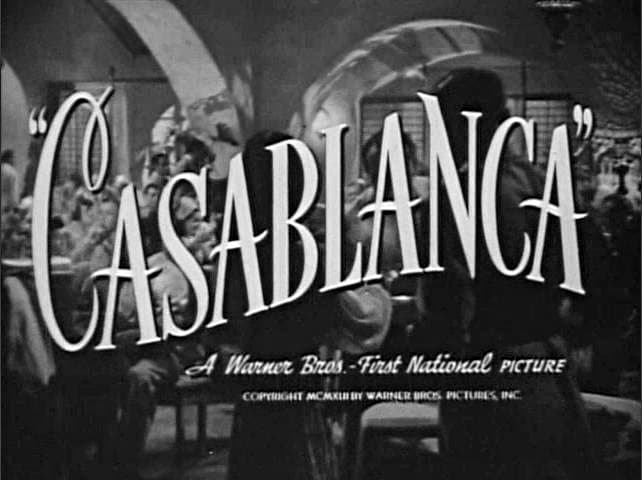
# Casablanca: Memory, Fog, and the Performance of Idealism
Casablanca is one of those films that feels deceptively simple until you begin paying attention to how it is constructed.
On the surface, it appears to be a romantic wartime drama about an American café owner helping his former lover and her resistance-leader husband escape Nazi-controlled territory.
But underneath that love triangle lies a film deeply shaped by the anxieties of World War II — a film obsessed with ideology, sacrifice, political neutrality, and the slow moral awakening of cynical men.
What makes the film extraordinary is not just the screenplay, but the way its formal and stylistic choices subtly shift depending on emotional and thematic context. Certain scenes — especially the Paris flashback sequence — visually break away from the rest of the film in ways that reveal Rick’s psychological state and the film’s larger ideological transformation.
A City Suspended Between Escape and Death
The opening scenes immediately establish Casablanca as a city suspended between glamour and death.
We see crowded marketplaces filled with refugees, Europeans, local Moroccans, corrupt officials, and desperate civilians trying to survive. The city feels alive, but never safe. One man attempts to flee after being caught with expired papers and is instantly shot in public.
Death in Casablanca is not shocking.
It is procedural.
That atmosphere matters because the city itself becomes symbolic of wartime uncertainty. Nobody truly belongs there. Everyone is waiting for passage somewhere else — geographically, emotionally, politically.
Michael Curtiz moves the camera through these spaces with remarkable fluidity. During the introduction to Rick's Café Américain, the shots glide rhythmically from gamblers to refugees to corrupt deals to musicians, almost like the camera itself is wandering through a living organism.
Each movement flows seamlessly into the next, creating what feels less like editing and more like choreography.
And then, suddenly, Rick appears.
Not through some dramatic hero shot, but through fragments:
- a hand signing a cheque,
- chess pieces being arranged,
- controlled gestures,
- detached observation.
Curtiz subconsciously establishes Rick as the gravitational center of this chaotic world long before the narrative fully confirms it.
The Performance of Neutrality
Rick is fascinating because he performs indifference.
He acts like a man emotionally retired from history.
But the film constantly hints that neutrality itself is unstable.
That is why the flashback sequence matters so much.
Throughout most of the film, Casablanca is visually grounded in noir aesthetics — smoke, shadows, crowded interiors, sharp contrasts, and moral ambiguity. Rick is frequently filmed in low-key lighting where only parts of his face remain illuminated.
He looks emotionally divided even when standing still.
The lighting externalizes his cynicism.
But the Paris flashback sequence disrupts this visual pattern almost entirely.
Memory as Cinematic Rupture
The transition itself begins through smoke and intoxication. Rick, drunk and emotionally vulnerable, slips into memory as cigarette smoke dissolves the present into the past.
The cinematography suddenly softens.
The lighting becomes brighter. The atmosphere grows dreamlike. The visual texture turns hazy and luminous.
Paris is filmed almost like memory itself — idealized, emotionally suspended, unreal.
And this stylistic rupture is crucial.
The flashback does not simply tell us Rick once loved Ilsa.
It reveals that the Rick we meet in Casablanca is a damaged version of someone else entirely.
In Paris, Rick laughs more easily. The lighting is warmer. The emotional heaviness of war briefly disappears behind romance and illusion. But as betrayal approaches, the visual texture slowly darkens. Shadows begin entering the frame. Rain dominates the mise-en-scène.
The emotional softness collapses into abandonment.
One of the most beautiful shots in the film occurs when Rick reads Ilsa’s letter at the train station. The camera isolates the letter in close-up while the rain causes the ink to bleed across the page.
The letter itself appears to cry.
It is melodramatic, yes.
But earned melodrama.
Modern films often confuse emotional intensity with loudness. Casablanca understands something subtler:
heartbreak becomes cinematic precisely because people try so hard to remain composed while collapsing internally.
Ilsa and the Aesthetics of Longing
Ilsa’s visual treatment throughout the film separates her stylistically from nearly every other character.
Ilsa is frequently shot through soft-focus lenses with glowing backlight, diffused lighting, and blurred backgrounds that give her presence an almost dreamlike quality.
She feels less like a realistic person and more like memory materialized.
Even when silent, the camera lingers intensely on her face and eyes, especially during “As Time Goes By.”
Cinema has always understood this dangerous truth:
longing photographs beautifully.
Rick does not merely love Ilsa.
He remembers her.
And memory itself becomes one of the film’s central visual themes.
Conviction Versus Hesitation
Another subtle stylistic contrast emerges in the presentation of Victor Laszlo and Rick.
Laszlo is consistently framed with clean lighting, visible facial clarity, and composed posture. His moral alignment appears visually stable. He represents ideological certainty — the resistance fighter who already knows what side of history he belongs to.
Rick exists differently.
Smoke. Half-lit face. Noir fragmentation. Ambiguous emotional framing.
He is internally divided between personal desire and political responsibility.
That contrast becomes the ideological core of the film.
Laszlo symbolizes conviction.
Rick symbolizes hesitation.
And Casablanca ultimately becomes a story about hesitation transforming into commitment.
Fog, Sacrifice, and Historical Responsibility
The final airport sequence remains one of the most emotionally iconic endings in cinema history.
The fog-covered runway. The soft lighting. The barely visible airplane emerging through mist.
The entire sequence feels suspended between dream and resignation.
The fog does more than create atmosphere.
It externalizes Rick’s emotional uncertainty.
What makes the scene devastating is that Rick finally chooses meaning over possession.
He lets Ilsa leave.
Not because he stops loving her, but because he finally understands that love alone cannot survive historical catastrophe untouched.
The cynical isolationist becomes someone capable of sacrifice.
And that transformation mirrors America’s wartime ideological shift from neutrality toward involvement.
Which makes the final line even more brilliant:
“Louis, I think this is the beginning of a beautiful friendship.”
The line sounds casual, almost playful.
But politically, it functions as symbolic reconciliation between America and Free France during the war. Rick and Louis walking side by side into the fog becomes less about two men and more about an emerging alliance against fascism.
That is why Casablanca endures.
Not simply because it is romantic. Not simply because Humphrey Bogart looks impossibly cool in a trench coat.
The film survives because every stylistic choice — lighting, framing, fog, shadows, camera movement, soft focus — quietly participates in the emotional and political evolution of its characters.
The visual ruptures in the film are not random aesthetic flourishes.
They reveal the fracture between illusion and reality. Between memory and history. Between neutrality and responsibility.
And somewhere inside all that fog and cigarette smoke, Casablanca becomes more than a wartime romance.
It becomes a film about people realizing that eventually, history forces everyone to choose a side.
Synaptic connections
Backlinks
This node currently sits alone in the archive.
Related reading
Nearby essays
Casablanca, Ideology, and the Politics of Desire
Casablanca survives not because it is merely romantic, but because it understood how cinema could reorganize emotion during moments of political uncertainty. Beneath the smoke and sacrifice lies a film negotiating masculinity, ideology, nationalism, and desire.
Separation Beyond Divorce: Moral Fragmentation and Social Anxiety in A Separation
A Separation is not merely a film about divorce. It is a film about the impossibility of moral purity within systems built upon pressure, silence, class anxiety, and emotional compromise.
12 Angry Men and the Slow Collapse of Certainty
12 Angry Men is not simply a courtroom drama. It is a study of how ego, bias, masculinity, and emotional projection infect systems that pretend to operate on reason alone.
If this resonated
Join the archive.
New essays, recent fragments, and what I am reading or watching, sent only when there is something worth sending.
Join archive