Drive: Sound, Silence, and the Violence Beneath the Fantasy
Nicolas Winding Refn transforms synth music, silence, and sonic transitions into psychological architecture.
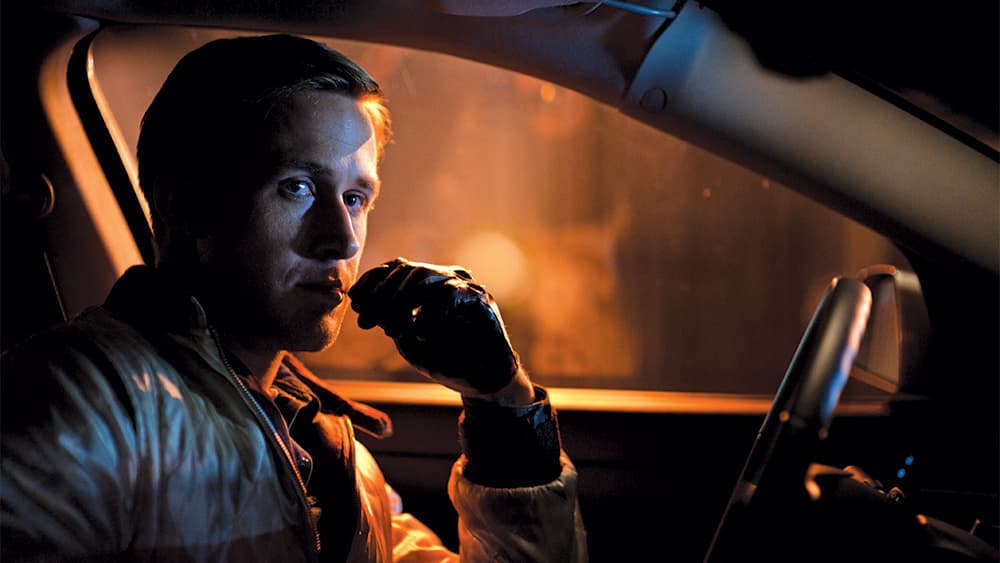
# Drive: Sound, Silence, and the Violence Beneath the Fantasy
Drive understands something many modern thrillers forget:
tension is not created only through what we see, but through what we hear, what we almost hear, and what suddenly disappears.
Directed by Nicolas Winding Refn, the film constructs a cinematic universe where sound constantly shifts between reality and emotional fantasy.
Engines roar like animals. Synth music feels like memory. Silence becomes oppressive. Violence arrives not only visually, but sonically.
And that sonic instability becomes the psychological core of the entire film.
Sound as Emotional Access
What makes Drive particularly fascinating is the way non-diegetic music repeatedly emerges from or becomes motivated by diegetic sound already existing inside the filmic space.
The soundtrack never feels fully detached from the world of the characters.
Instead, Refn frequently blurs the line between internal emotion and external reality through what film theorists describe as trans-diegetic sound — moments where music appears to slide gradually between the physical world and the psychological interiority of a character.
This becomes especially important because the Driver himself functions almost like an empty cinematic vessel.
The Driver barely speaks throughout the film. The Driver rarely verbalizes emotion and often appears emotionally disconnected from ordinary human interaction.
Because of this, sound becomes one of the primary ways the audience gains access to his psychology.
In Drive, emotion is communicated less through dialogue than through:
- rhythm,
- sonic layering,
- silence,
- mechanical noise,
- and musical transition.
The Opening Getaway Sequence
The opening getaway sequence immediately establishes this sonic philosophy.
The scene begins with the Driver preparing for a robbery while a suspenseful loop of electronic beats slowly emerges beneath diegetic environmental sounds.
Refn carefully layers:
- the ticking watch attached to the steering wheel,
- baseball commentary from the radio,
- intercepted police transmissions,
- burglar alarms,
- engine vibrations,
- subtle vehicle mechanics.
Individually, these sounds feel ordinary.
Together, however, they create an intensely compressed sonic space where the audience becomes hyper-aware of timing, movement, and surveillance.
The city itself begins to feel rhythmic rather than geographical.
The Driver navigates Los Angeles not emotionally, but sonically.
Music Born from Environment
This is where the relationship between diegetic and non-diegetic sound becomes fascinating.
The electronic score does not abruptly invade the scene externally.
Instead, the rhythmic ticking of the watch and repetitive pulse of police transmissions gradually motivate the musical structure itself.
The soundtrack feels almost born from the environment.
The effect is subtle but psychologically powerful.
Rather than existing outside the filmic world, the music appears synchronized with the Driver’s sensory awareness.
The audience becomes trapped inside his sensory-motor perception where every sound matters strategically.
Refn’s editing reinforces this further.
When the second robber enters the vehicle, the Driver does not accelerate dramatically like a conventional action protagonist. Instead, he drives slowly and carefully while the synth pulse remains calm, almost meditative.
This creates a fascinating tonal contradiction.
Most getaway sequences in crime cinema rely on chaotic cutting and orchestral escalation.
Drive instead uses sonic restraint.
The tension exists not because the Driver panics, but because he refuses to.
When Fantasy Disappears
Then comes one of the sequence’s most effective sonic transitions.
As the police begin noticing the vehicle, the non-diegetic music gradually disappears, leaving only:
- the raging engine,
- screeching tires,
- helicopter blades,
- surrounding traffic.
The audience is suddenly thrown back into material reality.
And this transition matters deeply.
Earlier, the soundtrack transformed Los Angeles into stylized rhythm-space — almost dreamlike in its nocturnal coolness.
Once the music vanishes, the city becomes concrete and hostile again.
The Driver no longer feels mythic.
He feels vulnerable.
Refn repeats this sonic strategy throughout the film whenever fantasy and violence begin overlapping psychologically.
Violence Without Musical Distance
The motel scene demonstrates this beautifully.
Unlike the stylized calmness of the opening sequence, the motel confrontation strips away almost all musical mediation.
The scene begins with near-total silence interrupted only by brutally distinct diegetic sounds:
- shotgun blasts,
- shell casings,
- buzzing ear trauma,
- mattresses flipping,
- bodily struggling,
- flesh crushing against the curtain rod.
What makes the sequence disturbing is the hyper-materiality of the sound design.
Every impact feels tactile.
The audience hears not simply violence, but bodily destruction itself.
Blood splashes. Bones crack. Breathing becomes animalistic.
Unlike the opening getaway sequence — where synth music stylized criminality into nocturnal coolness — the motel scene removes emotional distance almost entirely.
The Driver’s violence ceases feeling cinematic in the glamorous sense.
It becomes animalistic.
Importantly, Refn avoids traditional action-film scoring because music would aestheticize the brutality too cleanly.
Instead, silence forces confrontation with physical consequence itself.
Even the faint sounds of cars passing outside the motel become disturbing because they remind us that ordinary life continues indifferently around extreme violence.
The Elevator Scene and the Collapse of Fantasy
However, the elevator sequence remains the film’s most extraordinary use of trans-diegetic sound and arguably its emotional center.
The scene begins mechanically.
We hear:
- elevator chains,
- metallic movement,
- humming machinery,
- enclosed acoustics.
The soundscape remains entirely diegetic at first, grounding the audience inside physical realism and impending danger.
Then the Driver notices the gun.
What follows becomes one of the most beautiful and horrifying sound transitions in contemporary cinema.
As the Driver gently pulls Irene closer and kisses her, the mechanical sounds begin dissolving into a slow synth composition that feels dreamlike, suspended, almost sacred.
The lighting softens. Time appears to slow down.
And suddenly, reality itself feels unstable.
This is where the sequence becomes theoretically fascinating.
The music does not feel externally imposed like ordinary film scoring.
Instead, it seems to emerge organically from the emotional pressure already existing inside the scene.
For a brief moment, the Driver experiences himself not as violent criminality embodied, but as tenderness.
As something human.
The Hero and the Monster
Then the music disappears.
The elevator doors close.
The diegetic world returns violently.
What follows becomes horrifying precisely because of the transition preceding it.
The Driver smashes the assassin’s head repeatedly against the elevator floor while the audience hears every crunch, grunt, stomp, and wet impact with unbearable clarity.
The sonic contrast becomes psychologically devastating.
The same man who kissed Irene gently moments earlier now sounds monstrous.
Bones crush audibly beneath his feet. The elevator amplifies every impact mechanically.
Even before the camera fully reveals the destroyed face, the audience has already imagined it through sound itself.
And that imagination matters.
Refn understands something essential:
sound often produces more visceral horror than visual imagery alone.
The audience mentally completes violence through sonic detail.
What makes the sequence even more devastating is that Irene witnesses this transformation alongside the audience.
The trans-diegetic music briefly allowed both her and the Driver to exist inside romantic cinematic fantasy.
Once the soundtrack collapses back into brutal diegetic realism, she sees the reality beneath his mythologized persona.
The “hero” and the “monster” become inseparable.
And that duality defines the entire film.
Synth Music as Dream-State
Even the songs themselves function psychologically rather than decoratively.
Tracks like “A Real Hero” frame the Driver simultaneously as mythic savior and emotionally damaged loner.
The lyrics externalize emotions he himself cannot verbalize.
Throughout Drive, sound repeatedly destabilizes the boundary between cinematic fantasy and physical violence.
Refn does not use music simply to intensify emotion conventionally.
He uses sonic transitions to expose the unstable emotional architecture of the Driver himself.
The synth music represents the dream.
The diegetic violence represents the body.
And the transitions between them reveal how fragile that dream actually is.
Beauty Before Brutality
That is why Drive remains haunting.
Not because it is violent.
Cinema has always been violent.
The film lingers because Refn understands something far more disturbing:
the audience briefly experiences the Driver’s violence through beauty, rhythm, tenderness, and longing before being violently forced back into reality through sound itself.
And that collapse between fantasy and brutality becomes psychologically unforgettable.
---
# Works Cited
Drive. Directed by Nicolas Winding Refn, performances by Ryan Gosling and Carey Mulligan, FilmDistrict, 2011.
Hunter, Ben. “Trans-Diegetic Music in Film.” Alphaville: Journal of Film and Screen Media, vol. 3, 2012.
“What Is Diegetic and Non-Diegetic Sound?” Adobe Creative Cloud, https://www.adobe.com/creativecloud/video/hub/ideas/diegetic-vs-non-diegetic-sound.html
Synaptic connections
Backlinks
This node currently sits alone in the archive.
Related reading
Nearby essays
Casablanca, Ideology, and the Politics of Desire
Casablanca survives not because it is merely romantic, but because it understood how cinema could reorganize emotion during moments of political uncertainty. Beneath the smoke and sacrifice lies a film negotiating masculinity, ideology, nationalism, and desire.
Separation Beyond Divorce: Moral Fragmentation and Social Anxiety in A Separation
A Separation is not merely a film about divorce. It is a film about the impossibility of moral purity within systems built upon pressure, silence, class anxiety, and emotional compromise.
12 Angry Men and the Slow Collapse of Certainty
12 Angry Men is not simply a courtroom drama. It is a study of how ego, bias, masculinity, and emotional projection infect systems that pretend to operate on reason alone.
If this resonated
Join the archive.
New essays, recent fragments, and what I am reading or watching, sent only when there is something worth sending.
Join archive