First Blood: Don't Push It
Ted Kotcheff's action film turns the hard-body myth into a study of trauma, survival, and national abandonment.
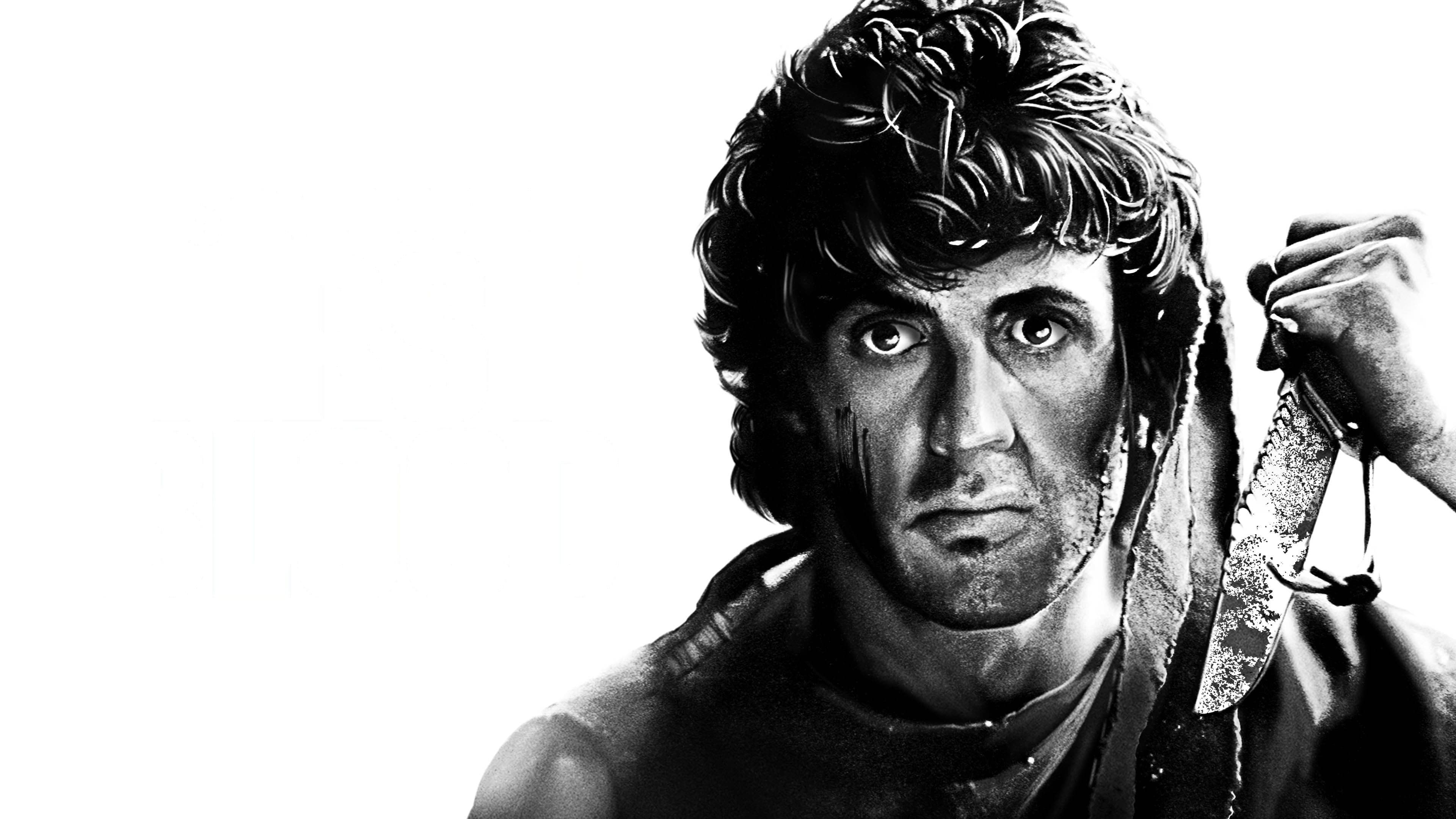
Introduction
Some action films are built to reassure us that strength is enough. First Blood (Ted Kotcheff, 1982) never quite lets us have that comfort. Released in the early 1980s, as the United States was still struggling to digest the trauma of Vietnam and drifting toward Reaganite promises of renewal through strength, First Blood stages the returning veteran not as triumphant hero, but as a national wound in motion. John Rambo is admired and feared, necessary and unwanted at the same time: the "perfect" soldier moving through a country that has no place to put him down.
This essay argues that First Blood both constructs and quietly dismantles the action genre's fantasy of invulnerable masculinity. Drawing on Jeffords' analysis of hard-body politics, Yvonne Tasker's account of masculinity as spectacle, Henry Bacon's distinction between gratuitous and mindful violence, Stephen Prince's aesthetic codes of screen harm, and Prof. Romao's action-profile of First Blood, I read the film's violence as a desperate survival reflex rather than a fantasy of mastery.
I. Hard Bodies and the Birth of Rambo
Jeffords describes the "hard body" as a central metaphor of Reagan-era American cinema: "the disciplined, white, male body" that stands in for a newly hardened nation after the perceived weakness of Vietnam (Jeffords, p. 257). In this framework, muscles do ideological work. They promise that what was lost in Southeast Asia can be regained through physical toughness, discipline, and righteous violence.
First Blood, however, sits at the hinge-point of this mythology. Jeffords notes that hard bodies have been a staple of Hollywood action "since 1982, when John Rambo first walked across the bridge into Hope, Oregon" (Jeffords, p. 256). The image is iconic: a lone man, pack on his back, entering a small town. Yet the context matters. Rambo's first goal is not vengeance; it is connection. He is looking for a former comrade who has died of Agent Orange exposure. His hardened body here is not a symbol of American resurgence, but of endurance under abandonment.
The film immediately counterposes Rambo with Sheriff Teasle and his deputies. Their bodies are older, softer, sedentary. They carry the authority of the town, but not the physical marks of war. Jeffords argues that Reagan-era rhetoric often associates national vulnerability with the "softened, pampered, and ill-trained male body" (Jeffords, p. 262). First Blood quietly reverses this polarity. The "soft" masculine body is the one that polices, humiliates, and misrecognizes. The "hard" body is the one the nation has used up and discarded.
Teasle's decision to move Rambo along and then arrest him is framed not as responsible policing, but as an attempt to push the visible legacy of Vietnam out of the town. Rambo's long hair, army jacket, and fatigues become signs of a history Hope would rather refuse. The film thus sets up the visual vocabulary Jeffords identifies: the hard body as charged sign, while refusing the ideological comfort her model often describes. Rambo's physique might look like mastery, but in narrative terms it marks him as surplus, as someone who no longer fits the nation that built him.
II. "Don't Push It": Masculinity as Performance and Strain
Tasker argues that the rise of the bodybuilder-action star exposes masculinity as a constructed display rather than a natural essence. She writes that within action cinema, the bodybuilder star creates narrative pressures "to incorporate moments of physical display" (Tasker, p. 1). The muscular male body becomes spectacle: a surface arranged for looking, a site where power is enacted and exposed simultaneously.
First Blood uses Stallone's body exactly in this way. The film repeatedly produces situations that allow the camera to frame his physique: the jail-cell undressing, the arm-stitching sequence, the fall through the trees, the rain-drenched poncho revealing muscle beneath. These moments align with Tasker's observation that "the male body is made startlingly visible," and that action films "work hard... to contrive situations for the display of the hero's body" (Tasker, p. 6). Rambo's competence and endurance are communicated through images of his body as both object of display and instrument of survival.
Yet Tasker also emphasizes that the muscular body is unstable as a signifier. She notes that bodybuilding is defined by "pleasurable display," but is often criticized because the musculature appears as "largely, non-functional decoration" (p. 5). This contradiction, spectacle versus function, marks the bodybuilder star as an inherently fragile construction. The body is powerful, but its very visibility invites doubt. In Tasker's words, bodybuilding "offers the possibility of self-creation" (p. 5), a fantasy of sculpting the body into an image of autonomy and control.
First Blood undercuts that fantasy in its final emotional collapse. When Rambo breaks down before Trautman, the muscular body that had performed invincibility throughout the film can no longer sustain the image it projected. The hardness ruptures: history overwhelms the surface. In this sense, First Blood stages masculinity as doubly performative. Rambo performs survival, Teasle performs state authority, and both falter. The power of the film lies not in the permanence of the hard body but in the moment its performance fails. The surface cracks, revealing the psychic cost beneath.
III. "They Drew First Blood, Not Me": Hunting the Hunter
Prof. Romao's action profile of First Blood identifies the capture scenario as a central structural engine of the film. As his breakdown of the second hunt sequence shows, the film repeatedly reconfigures the fundamental dynamic of pursuit: "the capturers become the hunted, while Rambo assumes ascendancy," culminating in "the capturer becoming captured, and the fugitive becoming the hunter" (Romao, 2025). This inversion of power is foreshadowed early, beginning with the jail sequence, the film's first capture scenario, where Rambo is stripped, beaten, and hosed down by deputies who treat him as an object to be processed rather than a veteran in distress. His flashback to torture collapses past and present into one continuous field of violence, suggesting that captivity is not simply an event but a condition that trails him.
After Rambo escapes, the manhunt begins. The forest sequence visualizes the inversion Romao describes: the police posse moves clumsily through the woods while Rambo uses the terrain to his advantage. The deputies' expectations erode as Rambo's decoys, traps, and counterattacks disable them one by one. Teasle, who entered the forest as the confident hunter, emerges disoriented and vulnerable.
Crucially, Rambo kills no one. His refusal to perform annihilating masculinity is central. When he says, "I could have killed them all," it resembles a moment of pure dominance, yet the speech functions as protest rather than threat. He is not asserting sovereignty over nature; he is demanding to be left alone. The inversion, then, is ethical as much as structural. The man most capable of killing refuses the genre's invitation to do so. First Blood transforms the capture scenario into something more morally fraught: a confrontation in which the hard body does not confirm authority but exposes its hollowness.
IV. "I Could've Killed 'Em All": Violence as Moral Burden
Bacon distinguishes between two broad modes through which violent fiction engages audiences. He describes violence in films like The Equalizer as appealing to "imaginary desires... to fantasize about spectacular violence being used to restore what we would recognize as being a just state of affairs" (Bacon, p. 16). This corresponds to what you refer to as Path A: violence that simplifies ethics, channels desire for retribution, and turns harm into spectacle. But the film repeatedly refuses the revenge template. Rambo intentionally kills no one. The only death, the deputy falling from the helicopter after ignoring orders, is framed as an avoidable accident. Rambo's shout of "You pushed it" is a protest, not a triumph; the film insists on his reluctance and his damaged subjectivity.
Bacon's Path B becomes visible in how First Blood links violence to trauma and exclusion. Flashbacks to Vietnam recur the moment Rambo is restrained or cornered. As Bacon writes of morally reflective violent fiction, such narratives aim to "offer plausible reflections on why crimes are actually committed, and what their psychological and social motivations as well as consequences might be" (p. 16). Rambo's responses thus appear less like calculated aggression than triggered survival reflex, violence as a symptom, not a solution.
Prince's analysis of screen violence clarifies how First Blood achieves this. Drawing on his aesthetic codes such as spatial displacement, metonymic substitution, and emotional bracketing, the film can emphasize harm without revelling in it. First Blood uses these strategies to foreground cost over thrill. When Rambo crashes through trees during the cliff jump, the camera lingers on pain, not spectacle. When the National Guard launches a rocket, the explosion is quickly undercut by awkward jokes and Trautman's disapproval. After each burst of violence, the film pauses to show consequences: wounded deputies, rattled townspeople, Rambo alone in the cave. Violence becomes a moral burden the film repeatedly forces its audience to carry, aligning with Bacon's Path B rather than Path A.
V. The Knife as a Symbol
Rambo's knife is the film's most concentrated symbol. On one level, it is a practical survival tool: he uses it to cut fabric, carve stakes, sew his wounds, and navigate the forest. On another, it is the visible trace of his training, the small piece of war he carries into civilian space. Teasle's initial confiscation of the knife is telling. It is not merely a safety measure; it is an attempt to strip Rambo of his last concrete link to his soldier identity, to assert that whatever he was "over there" has no place "here." The knife is treated as inherently threatening, not because of anything Rambo has done with it, but because of what it signifies: skill, experience, a past the town would rather not acknowledge.
In the forest, the knife becomes an extension of Rambo's body and mind. The most charged use of the knife comes in the confrontation with Teasle. Visually, the frame could have been lifted from a straightforward hard-body fantasy: the muscular hero, weapon pressed to the throat of the weaker authority figure. Yet Rambo uses this position not to kill, but to establish a boundary he refuses to cross. The knife becomes the edge between the man the war tried to fix in him and the man he is still trying to be. Read this way, the knife is a condensed biography. It is the hardened edge of a man shaped by violence, but also the instrument through which he insists that "nothing is over" just because the shooting stopped.
VI. "I Can't Get It Out of My Head": Collapse of the Hard-Body Fantasy
The final scene, where Rambo breaks down in Trautman's arms, completes the film's dismantling of hard-body mythology. Rambo recounts bodies blown apart, friends dying in his arms, and his inability to hold a basic job. The camera moves in close: his muscular frame fills the shot, yet what registers is not strength but grief. If, as Jeffords suggests, the hard body in 1980s cinema often reassures audiences that the nation has recovered its will, First Blood presents that body as precisely what the nation cannot integrate. Tasker's notion of masculinity as a spectacle under pressure finds its endpoint here: the performance collapses, and the body that once signified control now exposes damage. As Romao notes, action films typically end with an aftermath shot that restores order. In First Blood, the aftermath is emotional rather than structural.
Conclusion
First Blood occupies an uneasy place in action cinema. It inaugurates one of Hollywood's most recognizable hard-body icons while refusing to grant that icon the ideological comfort hard bodies usually promise. Rambo's body seems to promise invincibility, but the story presents a man who cannot easily live with what he has done or with how his country has treated him. First Blood does not simply celebrate masculine toughness; it shows how that toughness is produced, exploited, and then left to fracture.
References
Bacon, Henry. "Equality in the Face of Violence? Diverging Paths of Moral Speculation in Violent Fiction." The Palgrave Handbook of Violence in Film and Media, edited by Steve Choe, Palgrave Macmillan, 2022, pp. 13-35.
Jeffords, Susan. "Hollywood's Hard Bodies: The Gender Politics of Action Movies." A Companion to the Action Film, edited by Lester D. Friedman and David Desser, Wiley-Blackwell, 2019, pp. 256-69. Originally published 1994.
Kotcheff, Ted (Director). First Blood. 20th Century Fox. 1982.
Prince, Stephen. Classical Film Violence: Designing and Regulating Brutality in Hollywood Cinema, 1930-1968. Rutgers University Press, 2003.
Romao, Tico. "Action Profile: First Blood (1982)." FS 399: Action Cinema, University of Alberta, 2025. https://action-cinema.com/?p=1427
Tasker, Yvonne. Ch. 4 "Tough Guys and Wise-Guys: Masculinities and Star Images in the Action Cinema." Spectacular Bodies: Gender, Genre, and the Action Cinema. Routledge, 1993.
Synaptic connections
Backlinks
This node currently sits alone in the archive.
Related reading
Nearby essays
Casablanca, Ideology, and the Politics of Desire
Casablanca survives not because it is merely romantic, but because it understood how cinema could reorganize emotion during moments of political uncertainty. Beneath the smoke and sacrifice lies a film negotiating masculinity, ideology, nationalism, and desire.
12 Angry Men and the Slow Collapse of Certainty
12 Angry Men is not simply a courtroom drama. It is a study of how ego, bias, masculinity, and emotional projection infect systems that pretend to operate on reason alone.
Hot Fuzz: Speed, Satire, and the Editing of Hypercompetence
Hot Fuzz works because Edgar Wright genuinely understands the genre he is parodying. The film weaponizes montage, sound, and visual compression to expose how action cinema mythologizes masculine competence.
If this resonated
Join the archive.
New essays, recent fragments, and what I am reading or watching, sent only when there is something worth sending.
Join archive