Freud, The Uncanny, and the Haunted Mind of Psycho
Why the familiar becomes terrifying, and how Hitchcock turns the domestic space into a psychological graveyard.
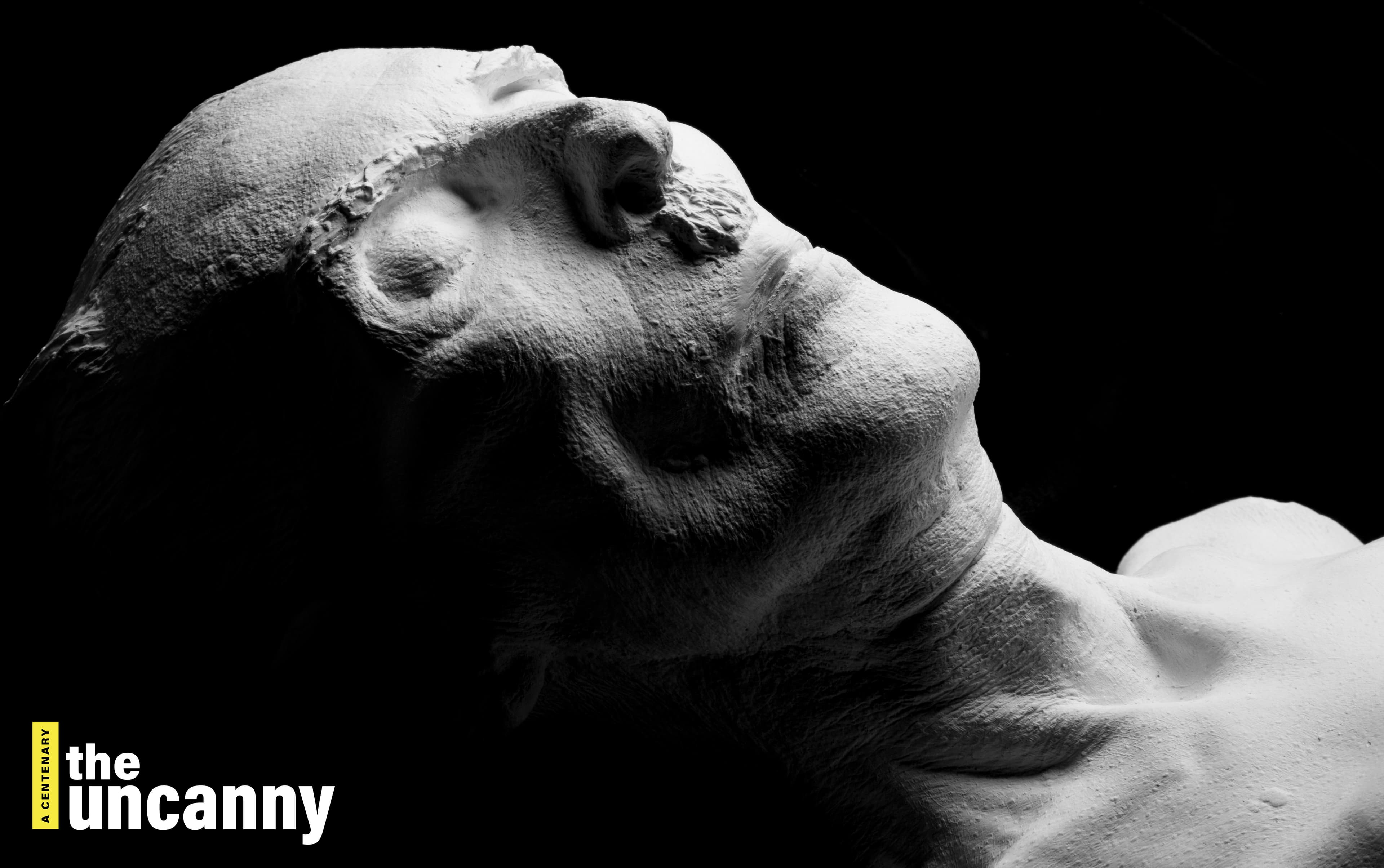
Sigmund Freud’s essay The Uncanny (1919) remains one of the foundational texts for understanding horror cinema. What makes Freud’s theory enduring is that it shifts horror away from monsters alone and toward psychology itself. Fear no longer comes merely from the external creature lurking in the dark. Instead, horror emerges from something much more intimate: the return of what the mind tried to bury.
Freud argues that the uncanny arises when something once familiar suddenly becomes strange. The German word unheimlich carries this contradiction within it. It refers simultaneously to the “unhomely” and to something hidden within the home itself. The uncanny is therefore not the fear of the unknown. It is the terror of the known returning in distorted form.
This is what makes the uncanny so psychologically devastating. A ghost is frightening not because it is alien, but because it resembles life too closely. A doll becomes horrifying when it almost appears human. A reflection becomes disturbing when it feels slightly independent from the self. Freud writes that the uncanny emerges when “the distinction between imagination and reality is effaced” (Freud 244). The border between what is internal and external collapses.
The return of the repressed
At the center of Freud’s argument is repression. Human beings suppress fears, desires, memories, and impulses that society or the ego cannot comfortably contain. Yet repression never fully destroys these things. They remain dormant beneath consciousness.
Horror cinema repeatedly stages this return.
The monster is often not truly external. It is the physical manifestation of psychic repression. Freud writes:
“This uncanny is in reality nothing new or alien, but something which is familiar and old-established in the mind and which has become alienated from it only through the process of repression.”
This line quietly explains a large portion of horror history.
The vampire represents repressed sexuality and forbidden desire. The zombie reflects anxieties around disease, mass society, and loss of individuality. Ghosts become embodiments of unresolved guilt and unfinished trauma. Horror externalizes the subconscious.
What makes Freud particularly useful for cinema is that film itself already resembles dreaming. Editing fractures time. Sound design destabilizes space. The close-up transforms ordinary faces into uncanny objects. Cinema naturally operates between reality and unreality, which makes horror perhaps the most psychoanalytic of genres.
Doubles, mirrors, and fractured selves
Freud spends significant time discussing the “double.” Doppelgängers, reflections, twins, shadows, and split identities create uncanny discomfort because they destabilize the coherence of the self.
The double initially appears protective. In ancient cultures, reflections and shadows symbolized immortality or continuity. But modernity transforms the double into something terrifying. The duplicate becomes evidence that the self is not unified.
This idea appears constantly in horror cinema:
- mirrors,
- masks,
- split personalities,
- haunted portraits,
- body doubles,
- and possession narratives.
The horror lies in realizing that identity itself may not be stable.
Few films embody this more powerfully than Hitchcock’s Psycho.
Psycho and the architecture of the uncanny
Alfred Hitchcock’s Psycho is often discussed as a slasher precursor, but beneath its surface it is fundamentally an uncanny film. Nearly every aspect of the film revolves around Freud’s ideas: repression, doubling, haunted domesticity, and fractured identity.
The Bates house is perhaps the clearest visualization of Freud’s unheimlich. A home traditionally signifies safety, warmth, and familiarity. Hitchcock transforms it into a site of dread. The domestic space becomes psychologically contaminated.
The house itself feels strangely alive.
It looms over the motel like a memory refusing burial. The upstairs windows resemble watching eyes. Norman moves through the home like a ghost trapped inside inherited trauma. The familiar structure of the family house becomes unhomely.
Freud’s uncanny often emerges when the boundary between life and death becomes unstable. Hitchcock literalizes this through the preserved corpse of Norman’s mother. Mrs. Bates exists in a horrifying in-between state. She is dead, yet still psychologically active. She speaks through Norman. She governs the house. She survives as repression embodied.
The reveal of the corpse is frightening not simply because it is grotesque, but because it violates ontological certainty. The dead should remain dead. When they persist within the realm of the living, reality itself begins to fracture.
Norman Bates as the uncanny double
Norman himself embodies Freud’s theory of doubling.
He is simultaneously son and mother. Victim and killer. Child and adult. Human and performance.
The terrifying aspect of Norman is not monstrous appearance but instability of identity. He cannot fully separate himself from the maternal figure he attempted to destroy. Repression collapses inward until Norman becomes possessed by the very thing he tried to eliminate.
Freud notes that the uncanny frequently emerges through repetition and involuntary recurrence. In Psycho, repetition structures the entire narrative:
- repeated spying,
- repeated acts of concealment,
- repeated returns to the mother,
- repeated movements between motel and house.
The film becomes trapped in psychological loops.
Even Hitchcock’s visual language reinforces this instability. Mirrors constantly fragment bodies. Shadows divide faces. Staircases create vertical psychological movement between conscious and unconscious spaces. The famous shower sequence itself becomes uncanny because it transforms an ordinary domestic act into violent horror.
The bathroom should be private. Safe. Predictable.
Instead, intimacy becomes vulnerability.
That inversion is central to Freud’s uncanny.
Why the uncanny still matters
Freud’s essay continues to matter because modern life itself increasingly feels uncanny. Technology constantly blurs distinctions between human and artificial, presence and absence, memory and simulation.
Digital culture produces new forms of uncanniness:
- AI-generated faces,
- deepfakes,
- virtual avatars,
- algorithmic replicas,
- synthetic voices,
- endless digital repetition.
The uncanny today often emerges not from Gothic castles but from screens.
Films like Ringu and Pulse extend Freud’s ideas into technological horror. Ghosts no longer haunt abandoned mansions. They travel through videotapes, internet networks, and digital signals. The supernatural merges with media systems.
What remains consistent is the structure of repression returning.
Modern horror repeatedly suggests that beneath the smooth surfaces of civilization lie unresolved anxieties waiting to erupt:
- loneliness,
- isolation,
- technological alienation,
- family trauma,
- social collapse,
- identity fragmentation.
Freud helps explain why horror feels strangely personal. The genre unsettles us because it exposes the instability beneath ordinary life. The uncanny reminds us that the familiar world is never entirely secure.
The home may already contain the ghost.
The self may already contain the monster.
Conclusion
Freud’s theory of the uncanny transformed horror from a genre of external monsters into a study of the unstable human mind. Through repression, doubling, haunted domesticity, and fractured identity, horror cinema reveals that terror often comes not from what is outside us, but from what silently survives within.
Psycho remains one of the clearest cinematic expressions of this idea. Hitchcock does not merely frighten the audience with violence. He destabilizes reality itself. The family home becomes haunted. Identity dissolves. The dead continue speaking.
The uncanny ultimately reveals a disturbing truth: human beings are never fully strangers to horror.
We recognize it because some part of it was always ours.
Works Cited
Freud, Sigmund. The Uncanny. 1919. Translated by David McLintock, Penguin Books, 2003.
Wood, Robin. Hollywood from Vietnam to Reagan. Columbia University Press, 2003.
Clover, Carol J. Men, Women, and Chain Saws: Gender in the Modern Horror Film. Princeton University Press, 1992.
Related reading
Nearby essays
Casablanca, Ideology, and the Politics of Desire
Casablanca survives not because it is merely romantic, but because it understood how cinema could reorganize emotion during moments of political uncertainty. Beneath the smoke and sacrifice lies a film negotiating masculinity, ideology, nationalism, and desire.
Separation Beyond Divorce: Moral Fragmentation and Social Anxiety in A Separation
A Separation is not merely a film about divorce. It is a film about the impossibility of moral purity within systems built upon pressure, silence, class anxiety, and emotional compromise.
12 Angry Men and the Slow Collapse of Certainty
12 Angry Men is not simply a courtroom drama. It is a study of how ego, bias, masculinity, and emotional projection infect systems that pretend to operate on reason alone.
If this resonated
Join the archive.
New essays, recent fragments, and what I am reading or watching, sent only when there is something worth sending.
Join archive