Logan and the Elegy of Action
James Mangold turns the superhero action sequence into a study of fatigue, mortality, and moral deceleration.
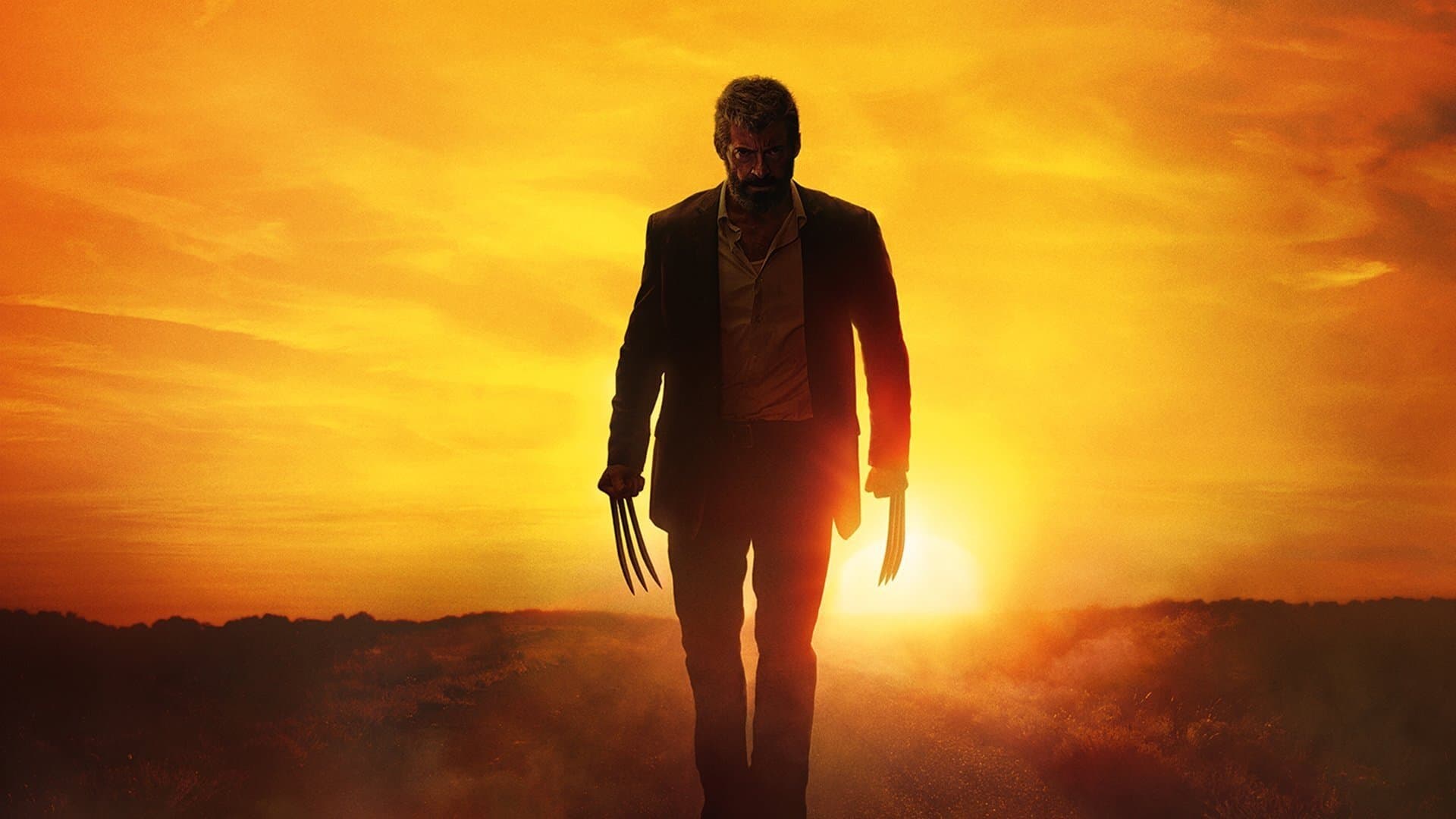
# Logan and the Elegy of Action Some action sequences are built to exhilarate; this one seems to exhale. In Logan (James Mangold, 2017), the farmhouse incursion (1 h 21 m – 1 h 32 m) turns a moment of domestic peace into a quiet collapse. What begins as a classical siege, a family under threat, a wounded hero defending a home, unfolds as an elegy of fatigue. Prof. Ramao (2021) describes action forms as “event schemas” that carry both physical and narrative weight, while Bordwell (2001) explains how style translates motion into emotion. Together, they offer the lens for reading this scene not as a triumph of force, but as the erosion of it.
Drawing also on Tasker’s (2015) notion of the “enhanced hero” and Kendrick’s (2019) analysis of action’s Western lineage, this essay argues that Mangold slows this dominant kinetic grammar into moral deceleration: the camera and body move together, not to assert power but to feel its weight. By 2017, superhero cinema had reached its kinetic limit, hyper-edited, spectacle-driven, frictionless. Logan resists that rhythm. Kendrick (2019) writes that by the late twentieth century, “storylines became thinner and often incoherent at times in order to make room for spectacular setpieces” (p. 48). This shift prioritized spectacle over narrative depth. Mangold reverses this inheritance. The farmhouse, once a Western emblem of refuge, becomes a stage for exhaustion rather than triumph.
Tasker (2015) calls the superhero body “enhanced,” built for spectacle that celebrates mastery, where “stunts and combat sequences are more demanding, louder and more spectacular” (p. 180). Logan's body, instead of symbolizing strength, becomes a record of wear. His healing power prolongs suffering rather than transcending it. Tasker (2015) notes that “the hero stripped of his powers” must “adapt, albeit temporarily, to a body with limits” (p. 180). In Logan, that temporary condition becomes permanent, the body with limits is all that remains.
Prof. Ramao (2021) explains that “action scenarios...entail physical risks to the characters situated in these scenarios” and that their manifestation is “normally found at the local level of a scene or a sequence” (p. 4). The farmhouse sequence unfolds across seven distinct movements - Respite, Siege Initiation, Assault and Paralysis, Counterattack, Pursuit and Escape, Aftermath, and Transition, each fragmenting before completion. This structural breakdown mirrors the collapse of action's traditional promise: that violence resolves, that heroes prevail, that homes can be defended. The sequence begins not with violence but with its opposite: dinner at the Munson farmhouse, warm candlelight, the rhythm of ordinary domestic life. Logan has just driven off corporate farm enforcers who threatened the family. The staging suggests brief refuge, what Prof. Ramao (2021) describes as the respite before “the moral test phase” (p. 7). But this peace collapses immediately when X-24 enters the farmhouse. Charles, disoriented and weak, mistakes the clone for Logan. The camera captures the confusion on Charles's face, then recognition, and then shock. X-24 stabs him. The moment plays in near-silence except for Charles's gasp and the sound of claws puncturing flesh. Tasker (2015) emphasizes that superhero narratives often center on “the psychic and emotional struggles faced by the central characters in coming to terms with their abilities, powers and bodies” (p. 180). Charles's death collapses those struggles into senseless tragedy. The surrogate father dies not in heroic sacrifice but in a bedroom, killed by the face of his son. Prof. Ramao (2021) observes that when action falters, “narratively significant consequences ensue” and “the narrative consequences of those action scenes are easily ascertained” (p. 10). Charles's death doesn't advance the plot toward resolution; it marks the collapse of moral order. The freeze doesn't just halt the action; it exposes the genre's limits. When the hero cannot protect, the form itself breaks down. The camera tightens into close framing; what little light remains comes from flickering flashlights cutting through darkness. X-24 moves through the Munson home methodically, killing Will Munson's wife and son. The violence happens off-screen or at the edge of frame, we hear more than we see. The soundscape becomes crucial here: muffled impacts, X-24 claws, bodies falling, wood splintering.
Bordwell (2001) notes that Hong Kong action uses sound to “clarify the action on a moment-by-moment basis” and to “give the action an extra expressive force” (p. 89). Mangold strips sound to its essential brutality, no musical score, no amplified effects, only the wet thud of violence against flesh and the crack of breaking bone. Where typical action films layer “dramatic music and sound effects” to “generate an excitement that is not primed by the concrete event taking place before the lens” (Bordwell, 2001, p. 75), Logan refuses compensation. We confront the concrete event itself. X-24 captures Laura. The camera stays low, following Logan as he discovers Charles's body, he’s struck with denial he speaks “it wasn’t me,” the soundscape remains stripped, only Logan's breathing, ragged and desperate. No music rises to tell us how to feel. The silence itself becomes expressive. Logan carries Charles toward the truck but X-24 blocks the path. The fight between Logan and X-24 begins.
Bordwell (2001) describes how Hong Kong action uses the “pause-burst-pause pattern” to create “a regular and recognizable pulse” where “moments of near-absolute stillness alternate with bursts of smooth, rapid-fire activity” (p. 81). Mangold adopts the pattern but empties it of energy. The pauses grow longer. The bursts grow slower. Logan and X-24 circle each other in the farmhouse yard. When they collide, the camera stays close to Logan's torso, following his labored movements. His claws enter frame abruptly from unexpected angles. Shallow depth of field isolates faces in tight close-ups. Each movement feels heavy. Bordwell (2001) refers to “expressive amplification of action,” which “seeks to characterize each chase or fight quite emotionally” to “vividly exemplify power, elegance, vengeful fury, awkwardness, indefatigability, or some combination of such qualities” (pp. 86-87).
The fight amplifies awkwardness and indefatigability, not the grace of combat but the weight of it. Every blow costs more energy than it gives. X-24 overpowers Logan. The superior clone moves with mechanical precision while Logan drags his weight like rusted metal, each movement a negotiation with pain. Caliban, trapped in the Reavers' vehicle, detonates grenades. The explosion produces harsh flash-frames; the handheld camera disorients rather than clarifies. The sound design momentarily overwhelms, a sharp crack followed by ringing silence. The tone refuses triumph. The explosion reads as self-erasure rather than heroic action. Prof. Ramao (2021) describes how action scenarios can combine vertically, where multiple forms occur simultaneously (p. 19). Here fight, rescue, and escape overlap momentarily, but none complete successfully. The blast kills several Reavers and injures Pierce but fails to stop X-24. Will Munson, dying from his injuries, pins X-24 with his truck before collapsing. The camera holds on Will's face as life drains from it, a long take that refuses to cut away. This moment extends what Prof. Ramao (2021) calls the “aftermath shot,” which depicts “the consequences of an act of violence” and “marks closure to the action element of a particular scene” (p. 6). But here the aftermath doesn't close, it prolongs. Will's sacrifice gives Logan and Laura seconds to escape with Charles's body. The editing accelerates into one-second cuts as they reach the truck, then abruptly slows as they drive away. The moral beat: action ends in depletion, not momentum. The final shots return to stillness. Logan and Laura drive through darkness carrying Charles's body.
The camera holds in medium-long shot. The farmhouse burns in the background, a long shot that visualizes the genre's moral exhaustion. Sound design strips to essentials, only the truck's engine and wind through the open window. Bordwell (2001) suggests that the “force of the movement and its onscreen presentation would stir in the viewers body a palpable echo of the actors gesture,” producing “an exhilarating experience, at once physical and emotive” (p. 91). Here, that echo becomes empathy rather than thrill. The viewer feels the fatigue, not the adrenaline. We share Logan's exhaustion, his desperation, his grief. The burning farmhouse becomes both ending and epitaph, a narrative turning point that turns toward death rather than renewal. They will bury Charles before continuing their journey, but the sequence ends here, with fire consuming the refuge and silence replacing violence.
Tasker (2015) notes that “the trope of the secret identity and of the equation of power with a costume or uniform that is put on for public performance is richly resonant” (pp. 180-181). Logan strips that performance bare. His worn body is no longer a costume but a confession, scars visible, movements labored, age undeniable. The duel between Logan and X-24 literalizes Tasker's concept of doubling, the hero confronting his perfected mechanical self. Tasker (2015) writes that “the interaction or conflict between these identities...is familiar material that can be developed dramatically,” with the hero often rendered “unstable or uncontainable” (p. 181). X-24's precision contrasts with Logan's heaviness: machine versus man, spectacle versus suffering. The film contrasts the smooth velocity of the engineered body with the tremor of the human. Masculinity, once equated with physical endurance and emotional restraint, now manifests through tenderness, his care for Charles, his protection of Laura, his willingness to admit vulnerability. Kendrick (2019) connects the action film to the Western's “cherished themes, including uncompromised individuality, strong masculinity, and a unique code of violence and restraint” (p. 36). These values defined the Western hero: the lone gunfighter who protects civilization while remaining outside it. Mangold stages the farmhouse like a dying Western myth. The long shot of flames devouring the house mirrors a sunset finale inverted- light signaling extinction, not renewal. The frontier has closed, and there is nowhere left to go. Isolation no longer frees the hero; it condemns him to a world without refuge.
Kendrick (2019) observes that revisionist Westerns of the late 1960s and 1970s centered on “aging outlaws and lawmen,” which suggested “the creakiness of the Old West mythology” (p. 38). Films like The Wild Bunch (Sam Peckinpah, 1969) and Unforgiven (Clint Eastwood, 1992) depicted aging men struggling with bodies that could no longer perform the violence their identities demanded. When Logan faces X-24, he confronts that mythology's remnant: the younger, stronger reflection that renders him obsolete. What Kendrick (2019) identifies as the pure action film's emphasis on “winning for its own sake” (p. 47) inverts here into losing despite everything. Prof. Ramao provides structure, revealing how sequences build meaning through form.
Bordwell provides rhythm: “film techniques” create “emphasis...on the sheer physical and emotional force of the action” (p. 77), showing how style communicates feeling. Tasker provides the body, exposing vulnerability beneath spectacle. Kendrick provides history, connecting contemporary action to its Western roots. Together they reveal how Mangold transforms action's kinetic grammar into moral reflection, converting the genre's conventions into instruments of understanding rather than excitement. The farmhouse incursion embodies action's entropy, build, rupture, stillness. The camera no longer glorifies violence; it endures it alongside the characters. The viewer doesn't cheer; they breathe through its exhaustion, sharing the weight of every movement. What remains is empathy, the residue of a genre confronting its own limits.
The sequence captures what happens when familiar patterns decay, when the enhanced body fails, when the Western's frontier closes for good. In that collapse, a new form emerges, not action as spectacle, but action as elegy. Through its dismantling of classical rhythm and embodiment of exhaustion, Logan redefines what action can express. The farmhouse incursion turns spectacle into elegy, merging Prof. Ramao's narrative structure, Bordwell's expressive style, Tasker's wounded body, and Kendrick's historical conscience. These frameworks combine to reveal a sequence that works against genre expectations while remaining deeply rooted in them. If the Western sought to civilize the frontier and the superhero film sought to transcend human limits, Logan seeks instead to understand what remains when those myths collapse. When motion breaks, meaning begins.
In that stillness, between breath and bullet, between violence and its aftermath, action cinema finally learns to rest.
References Bordwell, D. (2001). Aesthetics in action: Kung fu, gunplay, and cinematic expressivity. In E. C. M. Yau (Ed.), At Full Speed: Hong Kong Cinema in a Borderless World (pp. 73-93). University of Minnesota Press. Kendrick, J. (2019). A genre of its own: From Westerns to vigilantes to pure action. In J. Kendrick (Ed.), A Companion to the Action Film (pp. 35-54). Wiley-Blackwell. Prof. Ramao, T. (2021). Introduction. In Action Scenarios: The Essential Guide to Action in Film (pp. 1-27). Superchamp Books. Tasker, Y. (2015). Superhero action cinema: X-Men (2000) and The Avengers (2012). In The Hollywood Action and Adventure Film (pp. 179-191). Wiley-Blackwell.
Synaptic connections
Backlinks
This node currently sits alone in the archive.
Related reading
Nearby essays
Hot Fuzz: Speed, Satire, and the Editing of Hypercompetence
Hot Fuzz works because Edgar Wright genuinely understands the genre he is parodying. The film weaponizes montage, sound, and visual compression to expose how action cinema mythologizes masculine competence.
First Blood: Don't Push It
First Blood builds the Rambo icon while refusing the comfort of invulnerable masculinity. Its violence is not mastery but a survival reflex shaped by Vietnam, policing, and a country that cannot absorb its own wound.
If this resonated
Join the archive.
New essays, recent fragments, and what I am reading or watching, sent only when there is something worth sending.
Join archive