Psychoanalytic Film Theory and the Value of the Unconscious
A balanced defense of psychoanalytic film theory as a way of reading desire, anxiety, spectatorship, and cinematic meaning.
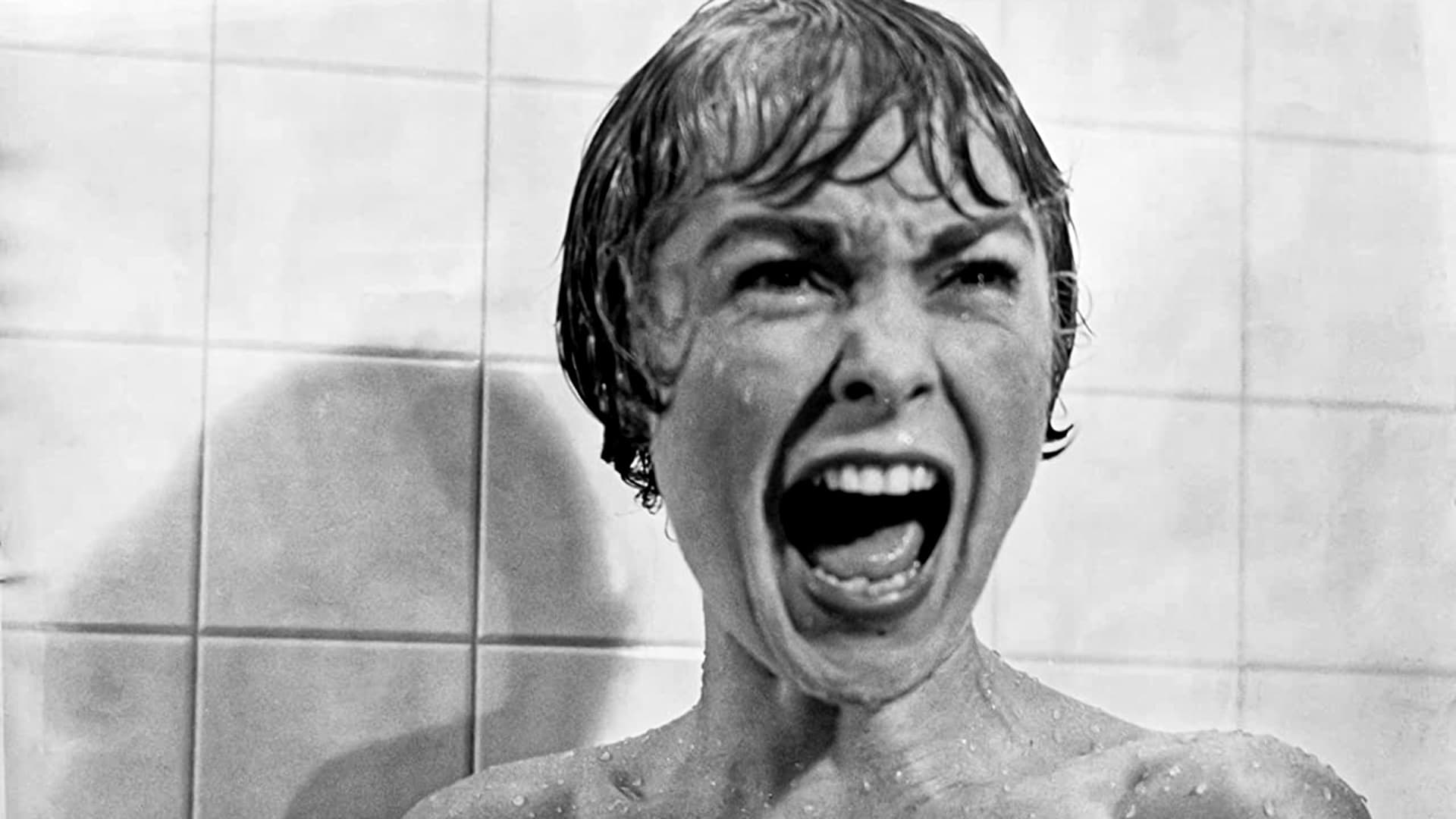
# Psychoanalytic Film Theory and the Value of the Unconscious Psychoanalytic film theory is an approach to understanding cinema that draws heavily from the theories and concepts of psychoanalysis. This theoretical framework explores the psychological motivations and unconscious desires that underlie the creation and interpretation of films. Psychoanalytic film theory is based on the belief that the images and narratives of cinema can reveal insights into our deepest fears, desires, and anxieties. The primary focus of this theoretical analysis is to understand how the film creates meaning and how that meaning reflects and influences the viewer's unconscious desires and experiences. While the psychoanalytic approach has been widely adopted by film scholars, it has also faced criticism for its narrow focus on the individual psyche and its lack of attention to social and political contexts.
By providing a deeper understanding of the psychological, social, and cultural dimensions of film, psychoanalytic film theory can help us to appreciate and analyze movies in new and insightful ways. In this analysis of psychoanalytic film theory, I will take a critical evaluative position that acknowledges the valuable insights that psychoanalytic theory can offer to the study of cinema while also recognizing its limitations and potential biases. I will explore how this theoretical framework can help us to understand the psychological dimensions of film while also recognizing the importance of considering social and cultural contexts in our analysis. Ultimately, my goal is to provide a nuanced and balanced perspective on psychoanalytic film theory that considers both its strengths and weaknesses.
One of the key contributions of psychoanalytic film theory is the idea that movies can be seen as a kind of "dream work" that reflects the unconscious desires and anxieties of both the filmmakers and the audience. By analyzing the symbols, metaphors, and other narrative elements of a film, psychoanalytic film theory seeks to uncover the deeper meanings and psychological themes that underlie the surface story. Sigmund Freud's essay "The Uncanny" has played a crucial role in the development of psychoanalytic film theory. Freud's concept of the uncanny is defined as "that class of the terrifying which leads back to something long known to us, once very familiar" (Freud, 1919, p. 2-3). According to Richard Allen, psychoanalytic film theorists have used the concept of the uncanny to analyze how films produce unsettling or disturbing effects on the viewers. Alfred Hitchcock's film "Psycho" is a prime example of a film that utilizes the uncanny to create an atmosphere of terror. In "Psycho," the character of Norman Bates embodies the uncanny.
Bates's duality as both himself and his mother creates an unsettling feeling that Freud would describe as the "return of the repressed." Bates's mother represents his repressed desires, and her presence in the film symbolizes his inability to come to terms with those desires (Allen, 2008). Noel Carroll's essay "The Philosophy of Horror" further explains how the uncanny can be used in horror films. Carroll argues that horror films often rely on the use of the uncanny to create a sense of terror in the viewers. He writes, "the horror film is a genre of the impure, a category of fiction that takes the fleshy, sensuous aspects of existence and turns them against the audience" (Carroll, 1990, p. 31). In "Psycho," the audience's familiarity with Bates as a sympathetic character is turned against them when his true nature is revealed.
Richard Allen's paper "Psychoanalytic Film Theory" explores the insufficiencies of psychoanalytic theory when applied to film. He argues that psychoanalytic film theory often relies on "an overly general and deterministic model of the psyche" (Allen, 2008, p. 140). Allen suggests that cognitive film theory offers a more nuanced approach to understanding how films affect viewers. Rather than relying on the viewer's unconscious desires, cognitive film theory emphasizes the cognitive processes involved in the viewer's perception and understanding of the film.
Laura Mulvey's "Visual Pleasure and Narrative Cinema" is a seminal work in psychoanalytic film theory, which explores the concept of the male gaze and its effects on the representation of women in cinema. Mulvey argues that Hollywood films are structured around the pleasure of the male viewer, who identifies with the male protagonist and objectifies the female characters. She uses Alfred Hitchcock's "Psycho" as an example, noting how the camera positions the audience as voyeuristic spectators, objectifying the female characters and aligning them with the killer. The cinematic shower scene in Psycho is a superb demonstration of the art of film technique. Beyond its technical brilliance, the scene's violence holds significant metaphysical implications.
By disrupting the natural order of things, the shower scene symbolically represents a rupture or violation of the human psyche's fundamental lack or incompleteness. As Jacques Lacan expounds in his essay "The Mirror Stage" (1949), this lack structures the human psyche, and Marion's violent demise serves as a symbolic representation of this fundamental absence. In her paper, Mulvey states, "the cinema offers a number of possible pleasures. One is scopophilia. There are circumstances in which looking itself is a source of pleasure" (Mulvey, 1975, p. 11). She argues that the male gaze is rooted in the pleasure of looking, which reinforces patriarchal power structures and reinforces the objectification of women in cinema. In her paper, Mulvey writes, "In a world ordered by sexual imbalance, pleasure in looking has been split between active/male and passive/female" (Mulvey, 1975, p. 6).
This quote highlights her argument that the act of looking in cinema is inherently gendered and reinforces patriarchal power structures. She also writes, "The function of woman in forming the patriarchal unconscious is two-fold, she first symbolizes the castration threat, and secondly the female is a bearer of the look" (Mulvey, 1975, p. 19). This quote illustrates how Mulvey sees women as being positioned as objects of male desire and subject to the male gaze in Hollywood cinema. However, some cognitive film theorists, such as David Bordwell and Noel Carroll, have criticized Mulvey's theory for its focus on the passive spectator and the idea that the audience is solely manipulated by the filmmaker. David Bordwell critiques Mulvey's theory of the male gaze and argues that it ignores the active engagement of viewers in the cinematic experience. He writes, "Mulvey's theory...is limited by its one-sidedness. It does not account for the ways in which the spectator might actually be actively engaged in the process of cinema viewing" (Bordwell, 1985, p. 61). While Mulvey's theory has been influential in feminist film theory and criticism, it has also faced criticism from the cognitive film theory perspective. Overall, Mulvey's "Visual Pleasure and Narrative Cinema" has had a significant impact on the field of psychoanalytic film theory, particularly in the analysis of gender and power in cinema.
However, her theory has also been subject to criticism from cognitive film theorists who offer alternative approaches to understanding the relationship between the viewer and the film. Jacques Lacan's paper on "The Mirror Stage" is a significant contribution to psychoanalytic film theory as it offers insights into the formation of subjectivity and identity. According to Lacan, the mirror stage occurs when an infant first recognizes itself in the mirror and experiences a sense of unity and mastery over its body. This experience shapes the individual's perception of themselves and their relationship to the world. In Alfred Hitchcock's "Vertigo," the character Scottie experiences a similar moment of identification and disidentification when he sees himself in the mirror as a transformed version of himself.
Lacan argues that the mirror stage is a crucial moment in the formation of subjectivity, as it establishes the individual's sense of self and their relationship to the external world. As he notes, "The mirror stage is a drama whose internal thrust is precipitated from insufficiency to anticipation – and which manufactures for the subject, caught up in the lure of spatial identification, the succession of phantasies that extends from a fragmented body-image to a form of its totality that I shall call orthopaedic – and, lastly, to the assumption of the armour of an alienating identity" (Lacan, 2006, p. 78 (4)). This idea is further elaborated by Slavoj Zizek, who argues that the mirror stage is not only a moment of identification but also a moment of alienation, as the individual's sense of self is based on an idealized image that is never fully attainable (Zizek, 1991, p. 38).
Another instance is offered by Allen(R.) offers in his analysis of the film "V ertigo". He argues that the film can be interpreted through the psychoanalytic concepts of fetishism and the gaze, stating that the protagonist's obsession with the female character's appearance is a manifestation of his fetishist desire for her and his attempt to master the anxiety produced by the castration complex (Allen, 2001, p. 87). Through this example, Allen demonstrates how psychoanalytic theory can provide an interpretive framework for analyzing the complex desires and anxieties presented in a film. However, Lacan's theory of the mirror stage has been criticized for its limited applicability to the complexities of subjectivity and identity formation.
As David Bordwell notes, Lacan's emphasis on the individual's relationship to the external world neglects the role of social and cultural factors in shaping subjectivity (Bordwell, 1979, p. 53). Additionally, Bordwell argues that Lacan's theory of the mirror stage fails to account for the ways in which identity is constantly in flux and subject to change. Despite these criticisms, Lacan's theory of the mirror stage remains an important framework for understanding the relationship between subjectivity, identity, and the cinema. In conclusion, Lacan's theory of the mirror stage provides a useful framework for understanding the formation of subjectivity and identity in cinema. In "V ertigo," Scottie's moment of identification in the mirror highlights the significance of the mirror stage in shaping the individual's perception of themselves and their relationship to the external world.
While Lacan's theory has been subject to criticism, it remains a valuable tool for analyzing the complex interplay between the individual, their psyche, and the cinema. In his paper "The Matrix, or, the Two Sides of Perversion", Slavoj Zizek applies Lacanian psychoanalytic theory to analyze the popular film "The Matrix". Zizek argues that the film embodies two forms of perversion: the "perverse subject" represented by the character of Cypher, who seeks to return to the comfortable illusions of the Matrix, and the "perverse object" represented by the Matrix itself, which offers the illusion of freedom and choice while actually perpetuating a system of control (Zizek, 2001, p. 11). Zizek supports his argument by examining key scenes and symbols in the film, such as the red and blue pills, the character of Morpheus, and the concept of the "desert of the real". He asserts that the film ultimately demonstrates the Lacanian idea that true freedom lies not in escaping the symbolic order, but in recognizing and accepting one's position within it (Zizek, 2001). However, film theorists like Warren Buckland have contradicting views of Zizek’s psychoanalytical analysis. Buckland argues that we need to focus on the embodied experience of film viewers and the ways in which they make meaning from the sensory information provided by the film. He states that "meaning is created in the moment of experiencing a film, and that this meaning is located in the embodied experience of the viewer" (Buckland, 2010, p. 22). This differs from Zizek's approach, which focuses more on the symbolic and ideological aspects of film, such as how it reflects larger social and political structures.
Buckland also critiques Zizek's use of Lacanian psychoanalysis, stating that it "doesn't allow for enough agency on the part of the viewer" (Buckland, 2010, p. 23). Buckland writes, "Cognitive semiotics allows us to account for the ways in which the viewer actively constructs meaning from the sensory information provided by the film, rather than simply being determined by their unconscious desires" (Buckland, 2010, p. 23). Despite these criticisms, Zizek's analysis remains a provocative and influential reading of "The Matrix", offering a unique perspective on the film's themes of control, choice, and freedom. In conclusion, the debate between psychoanalytic film theory and cognitive film theory provides a rich terrain for exploring the complex interplay between psychological and cognitive factors in film experience.
While psychoanalytic film theory emphasizes the role of the unconscious in shaping our emotional response to films, cognitive film theory highlights the cognitive processes involved in constructing meaning and understanding narrative. Both approaches offer valuable insights into the ways in which films can affect and engage audiences, and each has its own strengths and weaknesses. Ultimately, a balanced understanding of film experience requires a synthesis of both perspectives, as each provides a unique contribution to our understanding of the complex interplay between mind, emotion, and meaning in the experience of cinema. By recognizing the continued relevance of psychoanalytic theory, we can deepen our understanding of the ways in which films shape our experiences and perceptions.
Works Cited Freud, Sigmund. "The Uncanny." 1919. In The Standard Edition of the Complete Psychological Works of Sigmund Freud, edited by James Strachey, vol. 17, p. 217-256. London: Hogarth Press. https://web.mit.edu/allanmc/www/freud1.pdf, Accessed 15 Apr. 2023. Allen, Richard. "Psychoanalytic Film Theory: A Companion to Film Theory." In Film and Theory: An Anthology, edited by Robert Stam and Toby Miller, p.137-156. Malden, MA: Blackwell Publishing, 2008. https://eclass.srv.ualberta.ca/mod/resource/view.php?id=6739105, Accessed 15 Apr. 2023. Carroll, Noel. “The Philosophy of Horror: Or, Paradoxes of the Heart” (1st ed.), p. 31. Routledge. 1990. https://doi.org/10.4324/9780203361894, Accessed 15 Apr. 2023. Mulvey, Laura. "Visual Pleasure and Narrative Cinema." Screen, vol. 16, no. 3, 1975, pp. 6- 18. https://ia802801.us.archive.org/4/items/visual-pleasure-and-narrative-cinema/Laura-mulvey- visual-pleasure-and-narrative-cinema.pdf, Accessed 15 Apr. 2023. Bordwell, David. “Narration in the Fiction Film”. Routledge, 1985. p.61 https://archive.org/details/narrationinficti0000bord/page/n391/mode/2up, Accessed 15 Apr. 2023. Lacan, Jacques. "The Mirror Stage as Formative of the Function of the I as Revealed in Psychoanalytic Experience." 1949. http://www.lamarre- mediaken.com/Site/EAST_527_files/Lacan_Mirror_Stage.pdf, Accessed 15 Apr. 2023. Zizek, Slavoj. “Looking Awry: An Introduction to Jacques Lacan through Popular Culture. MIT Press”, 1991. ques_Lacan_Through_Popular_Culture, Accessed 15 Apr. 2023. Bordwell, David. “The Art Cinema as a Mode of Film Practice.” Film Criticism, vol. 4, no. 1, 1979, pp. 56–64. JSTOR, http://www.jstor.org/stable/44018650, Accessed 15 Apr. 2023.
Bordwell, David. The Way Hollywood Tells It: Story and Style in Modern Movies. 1st ed., University of California Press, 2006. JSTOR, http://www.jstor.org/stable/10.1525/j.ctt1pn74s, Accessed 15 Apr. 2023. Zizek, Slavoj. "The Matrix, or, the Two Sides of Perversion." Everything You Always Wanted to Know About Lacan (But Were Afraid to Ask Hitchcock), edited by Slavoj Zizek, V erso, 1992. https://www.lacan.com/zizek-matrix.htm, Accessed 15 Apr. 2023. Buckland, Warren. “What is Cognitive Semiotics, and What is it Doing in Film Theory?” Projections, vol. 4, no. 1, 2010, pp. 21-39. https://assets.cambridge.org/97805217/80056/sample/9780521780056wsn01.pdf, Accessed 15 Apr. 2023. Psycho. Directed by Alfred Hitchcock, performances by Anthony Perkins and Janet Leigh, Paramount Pictures, 1960. IMDb link: https://www.imdb.com/title/tt0054215/ Vertigo.
Directed by Alfred Hitchcock, performances by James Stewart and Kim Novak, Paramount Pictures, 1958. IMDb link: https://www.imdb.com/title/tt0052357/ The Matrix. Directed by the Wachowskis, performances by Keanu Reeves, Laurence Fishburne, and Carrie-Anne Moss, Warner Bros., 1999. IMDb link:
Synaptic connections
Backlinks
This node currently sits alone in the archive.
Related reading
Nearby essays
Casablanca, Ideology, and the Politics of Desire
Casablanca survives not because it is merely romantic, but because it understood how cinema could reorganize emotion during moments of political uncertainty. Beneath the smoke and sacrifice lies a film negotiating masculinity, ideology, nationalism, and desire.
Separation Beyond Divorce: Moral Fragmentation and Social Anxiety in A Separation
A Separation is not merely a film about divorce. It is a film about the impossibility of moral purity within systems built upon pressure, silence, class anxiety, and emotional compromise.
12 Angry Men and the Slow Collapse of Certainty
12 Angry Men is not simply a courtroom drama. It is a study of how ego, bias, masculinity, and emotional projection infect systems that pretend to operate on reason alone.
If this resonated
Join the archive.
New essays, recent fragments, and what I am reading or watching, sent only when there is something worth sending.
Join archive