Stories We Tell: Memory, Performance, and the Instability of Documentary Truth
Sarah Polley transforms documentary cinema into an investigation of memory, narration, reconstruction, and emotional subjectivity.
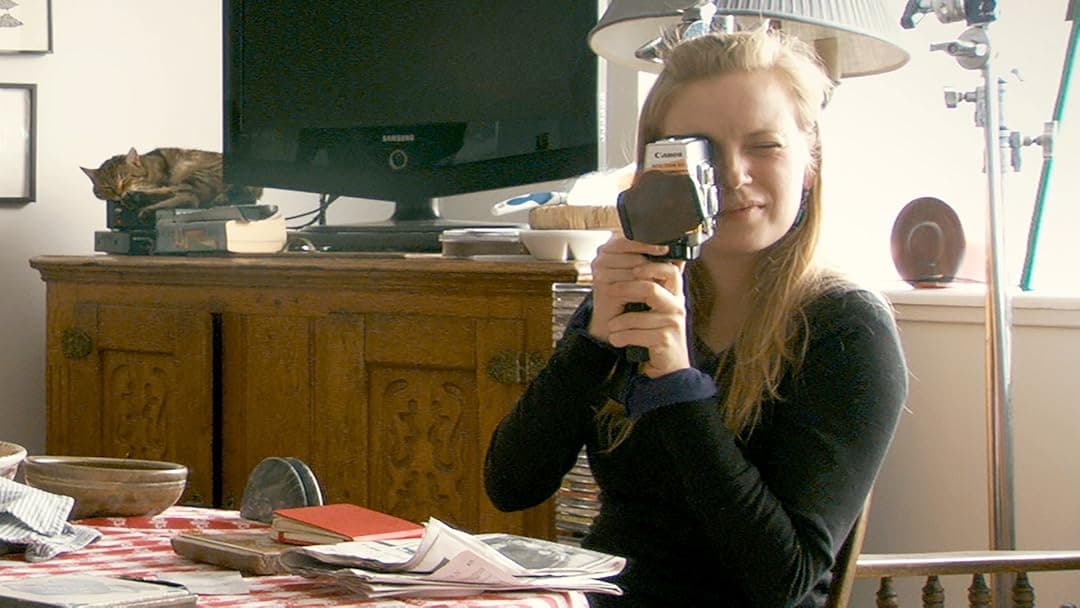
# Stories We Tell: Memory, Performance, and the Instability of Documentary Truth
Stories We Tell is a documentary that constantly destabilizes the audience's understanding of:
- truth,
- memory,
- narration,
- and representation.
At first glance, the film appears to be a deeply personal family documentary centered around Diane Polley, her relationships, and the long-hidden revelation surrounding Sarah Polley’s biological father.
But as the documentary unfolds, it gradually becomes clear that the film is not simply attempting to uncover factual truth.
It is interrogating whether objective truth can ever fully exist once memory, emotion, narration, and cinematic representation become involved.
And this philosophical uncertainty becomes the film’s emotional core.
Documentary Modes and Hybrid Form
What makes Stories We Tell so fascinating from a documentary-theory perspective is that it refuses confinement within a single documentary mode.
Instead, the film moves fluidly between:
- expository,
- participatory,
- performative,
- reflexive,
- observational,
- and poetic modes,
often blending multiple modes within the same sequence.
This hybridity becomes essential because the film itself argues that identity and memory are never singular or stable.
Different perspectives continuously reshape the meaning of the same event.
In many ways, the documentary resembles a cinematic version of the Rashomon effect.
Every family member remembers Diane differently. Every narration reshapes emotional truth. Every retelling becomes another performance of memory.
Reflexive Documentary and the Exposure of Construction
From the beginning, the documentary establishes an atmosphere strongly aligned with reflexive cinema.
The film repeatedly breaks the illusion of documentary transparency by exposing its own construction process openly.
We see:
- microphones,
- recording equipment,
- staged interviews,
- behind-the-scenes footage,
- Sarah directing participants.
Unlike conventional documentaries attempting to hide artificiality in order to preserve realism, Polley foregrounds mediation constantly.
This aligns directly with the reflexive documentary mode described by Bill Nichols.
Nichols argues that reflexive documentaries draw attention to filmmaking itself, reminding audiences that documentaries do not simply capture reality objectively.
They construct versions of reality through:
- editing,
- framing,
- narration,
- sequencing,
- and selection.
Polley embraces this fully.
The documentary repeatedly asks:
Who gets to tell the story? Who controls memory? Can family narratives ever remain neutral?
Recreated Footage and Emotional Reconstruction
One of the film’s most remarkable formal strategies involves recreated footage disguised initially as archival material.
The grainy Super 8-style sequences depicting Diane’s past blend seamlessly alongside authentic home-video footage.
At first, the audience instinctively assumes these images are genuine archives.
Only gradually do we realize many sequences are carefully staged recreations shot decades later.
This revelation becomes philosophically crucial.
The recreated images are not “fake” in a simplistic sense.
Instead, they reveal how memory itself functions psychologically:
through reconstruction.
Human beings rarely remember the past objectively.
We reconstruct emotional impressions through:
- photographs,
- fragments,
- stories,
- imagination,
- repetition.
Polley transforms this psychological process into cinematic form.
The recreated footage performs the documentary’s central argument:
all memory is partially constructed.
Visual Texture and Unstable Authenticity
The recreated sequences further reinforce this instability through visual texture.
Polley deliberately shoots them using aged cameras and degraded film stock so they merge aesthetically with authentic archival material.
The distinction between documentation and reconstruction dissolves visually.
The audience experiences uncertainty not because the film lies maliciously, but because memory itself is unstable.
And this instability connects directly to the documentary’s performative dimension.
Sarah Polley as Participant and Subject
Unlike purely observational documentaries attempting detached neutrality, Stories We Tell embraces emotional subjectivity openly.
Sarah Polley functions simultaneously as:
- filmmaker,
- narrator,
- participant,
- daughter,
- investigator,
- emotional subject.
The documentary appears to concern Diane.
But beneath that surface lies Sarah’s own search for identity and emotional grounding after discovering the truth surrounding her biological father.
The film therefore becomes deeply performative in the Nicholsian sense because personal experience shapes the structure and emotional truth of the documentary itself.
Facts matter.
But emotional interpretation matters equally.
Narration and Unstable Authority
This becomes especially fascinating through the film’s use of narration.
At first, the documentary appears partially expository because visual material often becomes subordinate to narration.
However, unlike traditional expository documentaries employing a singular “voice-of-God” narrator, Polley deliberately avoids stable authority.
Much of the narration is delivered by Michael Polley, Sarah’s legal father.
This creates immediate instability.
Michael functions simultaneously as:
- storyteller,
- participant,
- grieving husband,
- emotional witness,
- unreliable narrator.
His memories are shaped by:
- grief,
- nostalgia,
- betrayal,
- affection,
- humor,
- longing.
The documentary never permits his perspective to become final truth.
Even Sarah’s own voice remains surprisingly fragmented.
Rather than dominating the documentary directly, she often appears through:
- recordings,
- emails,
- behind-the-scenes interactions,
- conversations.
This restraint prevents the film from collapsing into narcissistic autobiography.
Sarah remains structurally central while frequently remaining emotionally indirect.
Participatory Documentary and Emotional Performance
The film also incorporates strong elements of the participatory mode.
Sarah interacts directly with interviewees, shaping conversations actively rather than pretending the camera remains invisible.
She asks questions. Provokes memory. Influences emotional responses through her presence.
The documentary openly acknowledges that cameras alter the reality they attempt to record.
And this becomes especially powerful because family members frequently begin performing versions of themselves consciously once interviewed.
Some romanticize Diane. Others complicate her image. Some contradict one another directly.
The interviews therefore become less about discovering objective truth and more about observing how people narrativize emotional history.
Repetition, Context, and Meaning
One of the documentary’s smartest formal strategies involves repeating recreated shots multiple times under different narrational contexts.
A particularly striking example involves repeated footage of Diane speaking on the phone.
Initially, the image suggests warmth and charisma.
Later narrations transform the same footage into evidence of:
- agitation,
- secrecy,
- emotional instability,
- hidden relationships.
The image itself remains unchanged.
Only the narration changes.
Yet the emotional meaning transforms entirely.
This becomes one of the film’s central arguments:
images do not possess fixed truth independently.
Meaning emerges relationally through narrative framing.
Documentary Truth and Reflexive Critique
In this sense, Stories We Tell becomes deeply reflexive about documentary cinema itself.
Traditional documentaries often encourage audiences to trust archival footage instinctively as objective evidence.
Polley undermines this assumption carefully.
Even authentic footage acquires radically different meanings depending upon:
- editing,
- sequencing,
- narration,
- context.
Yet the film does not collapse entirely into relativism.
There are still facts. There were still betrayals. There were still relationships and emotional consequences.
But emotional truth remains distributed unevenly across memory.
Editing, Fragmentation, and Memory Structure
The editing plays an enormous role in constructing this complexity.
The film combines:
- recreated footage,
- interviews,
- photographs,
- archival recordings,
- observational moments,
- staged material
into fluid nonlinear structure mirroring memory itself.
Rather than progressing chronologically, the documentary loops repeatedly through emotional revelation from shifting perspectives.
This creates an investigative rhythm where every new testimony destabilizes earlier assumptions.
The documentary also contains strong poetic dimensions.
Many montage sequences prioritize emotional atmosphere over informational clarity.
Memory drifts associatively rather than logically.
At the same time, the film preserves observational realism through:
- conversational pauses,
- awkward silences,
- overlapping dialogue,
- forgotten details,
- contradictions.
These imperfections become essential.
The documentary understands that authenticity often emerges precisely through inconsistency.
Stories as Emotional Survival
One of the film’s greatest achievements is that despite its formal complexity, it never becomes emotionally cold.
Beneath all the reflexive experimentation lies genuine vulnerability.
Sarah Polley is not simply deconstructing documentary form academically.
She is trying to understand:
- her mother,
- her father,
- herself,
- and the unstable stories families inherit emotionally.
And perhaps that is why the documentary resonates so deeply.
It understands that family stories are never singular narratives passed down cleanly across generations.
They are accumulations of:
- contradiction,
- omission,
- performance,
- resentment,
- idealization,
- emotional revision.
Every person remembers differently because every person survives emotionally through different versions of the past.
Ultimately, Stories We Tell uses multiple documentary modes not because Polley is stylistically indecisive, but because no single documentary form could adequately represent the instability of memory and identity the film explores.
Pure exposition would feel falsely authoritative. Pure observation would conceal mediation dishonestly. Pure subjectivity would risk emotional solipsism.
Instead, Polley constructs hybrid documentary language capable of acknowledging one difficult truth:
documentaries, like memories, are never direct access to reality itself.
They are stories we tell in order to live with reality afterward.
---
# Works Cited
Nichols, Bill. Introduction to Documentary. Indiana University Press, 2010.
Stories We Tell. Directed by Sarah Polley, National Film Board of Canada, 2012.
“The Documentary Modes of Bill Nichols.” Documentary Film Theory Journal, https://documentarytheoryjournal.org
Synaptic connections
Backlinks
This node currently sits alone in the archive.
Related reading
Nearby essays
Casablanca, Ideology, and the Politics of Desire
Casablanca survives not because it is merely romantic, but because it understood how cinema could reorganize emotion during moments of political uncertainty. Beneath the smoke and sacrifice lies a film negotiating masculinity, ideology, nationalism, and desire.
Separation Beyond Divorce: Moral Fragmentation and Social Anxiety in A Separation
A Separation is not merely a film about divorce. It is a film about the impossibility of moral purity within systems built upon pressure, silence, class anxiety, and emotional compromise.
12 Angry Men and the Slow Collapse of Certainty
12 Angry Men is not simply a courtroom drama. It is a study of how ego, bias, masculinity, and emotional projection infect systems that pretend to operate on reason alone.
If this resonated
Join the archive.
New essays, recent fragments, and what I am reading or watching, sent only when there is something worth sending.
Join archive